Innovative Timber-Frame Homes Transform Housing in Indigenous Communities
📅 1 week ago
Wayne Allary collaborates with Cornerstone Timberframes to provide energy-efficient timber-frame kit homes in Indigenous communities, enhancing construction speed and quality.
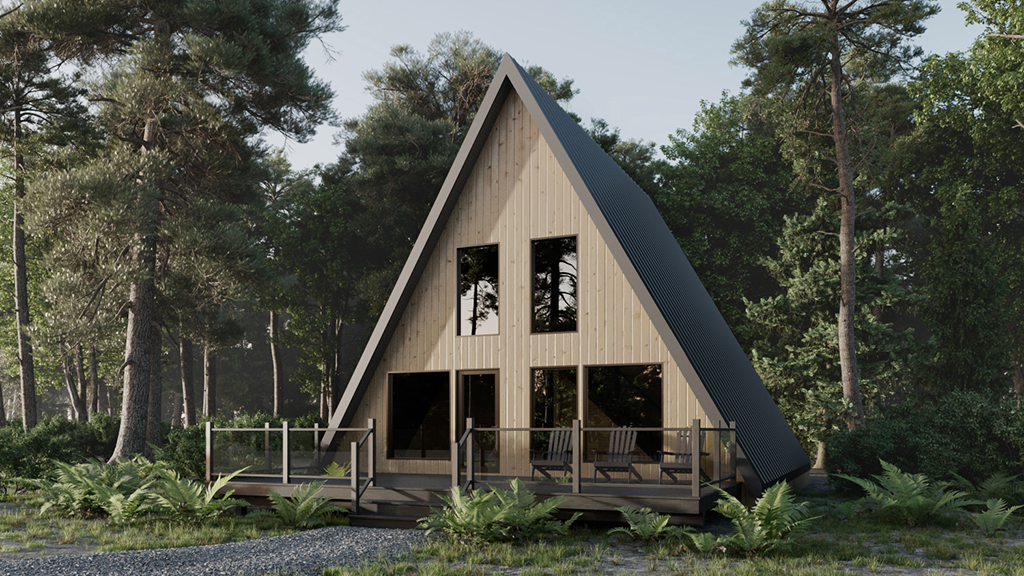
Wayne Allary, a veteran stick-frame builder with a history of serving remote Indigenous and rural communities as far north as the Arctic, has recently made a significant shift in his construction approach. He has partnered with Cornerstone Timberframes to introduce timber-frame kit homes featuring glulam members. This collaboration aims to improve the quality and energy efficiency of homes, with the potential to erect them in just 45 days, significantly reducing the time it typically takes to build a conventional house.Allary's general contracting firm, Waasa Indigenous Services Inc., has successfully completed five of Cornerstone’s A-frame kit residences in the First Nation community of Shoal Lake 39A, located east of Winnipeg. Following this, Waasa constructed five prefabricated kit bungalows of various designs, all of which include full basements. These homes not only showcased rapid construction times but also required fewer trades compared to traditional building methods, thanks to the prefabrication process employed by Cornerstone.
According to Cornerstone Timberframes, their timber kit houses, which utilize glulam beams, offer flexible layouts with non-load-bearing walls that can be easily moved. The homes are reported to be approximately 30 percent more energy-efficient than traditional houses. This energy efficiency is attributed to an exterior insulation envelope that features eight inches of rigid foam, extending continuously from the foundation to the roof. "There is no place heat can escape or cold can get in," Allary emphasizes. Additionally, heat recovery ventilators are installed to exchange stale indoor air with fresh outdoor air while reclaiming heat from the outgoing air stream.
Although the cost of kit homes exceeds that of traditional stick-frame houses, Cornerstone Timberframes asserts that the advantages of quicker erection times, enhanced energy efficiency, and long-term durability make them a worthwhile investment. Each component of the homes is prefabricated and pre-fitted before leaving Cornerstone’s fabrication facility, ensuring that everything is sequenced for easy assembly on-site.
Waasa also offers training programs for community residents interested in learning how to build these kit homes. Allary expresses his commitment to empowering local residents, stating, "Once we train them, they will be able to work alongside of us, and hopefully if you build enough houses with them, they can take over with minimal management." He believes that the rising competition in construction will not threaten his business, as there remains a pressing demand for housing in northern Ontario and Manitoba.
Allary, who identifies as an Aboriginal person, is dedicated to fostering opportunities for his community. He ensures that new homeowners are well-informed about their residences, providing comprehensive walkthroughs of the home systems, including the HRV and safety features.
Cornerstone Timberframes considers Shoal Lake to be the first location for their kit houses and is currently in discussions with two additional communities for similar housing projects. They are also developing plans for a kit four-plex for another community and may prefabricate tiny homes measuring between 300 and 325 square feet for an Indigenous community.
In response to the escalating housing demand, Cornerstone Timberframes plans to ramp up production at their plant from three shifts to four and invest in new equipment sourced from Europe to enhance panelization capabilities. Currently, they are constructing between five to eight houses annually but anticipate increasing that number to between 18 and 24 in the coming year, based on demand projections.
For the housing market to thrive in underserved, remote communities over the next five years, Allary stresses the necessity for the involvement of Indigenous leaders and the availability of government funding. He is optimistic about the future, suggesting that the industry is on the verge of significant growth. "We’re on to the tip of the iceberg of how this housing is going to take off for us. We’re getting more traction every day, not only in First Nation communities but rural areas as well," he concludes.
🏷️
timber-frame homes
Indigenous housing
construction training
prefabrication
glulam beams
housing demand
sustainable building
rural communities
energy efficiency
Cornerstone Timberframes
← Previous Post
Toronto Public Health Urges Families to Update Student Vaccination Records Ahead of New School Year1 week ago
Next Article →
AEM and CGA Launch Initiative to Promote Safe Digging Practices with New Decal6 days ago