
Feasibility Study Launched for Winnipeg Rail Bypass Proposal
📅 2 months ago
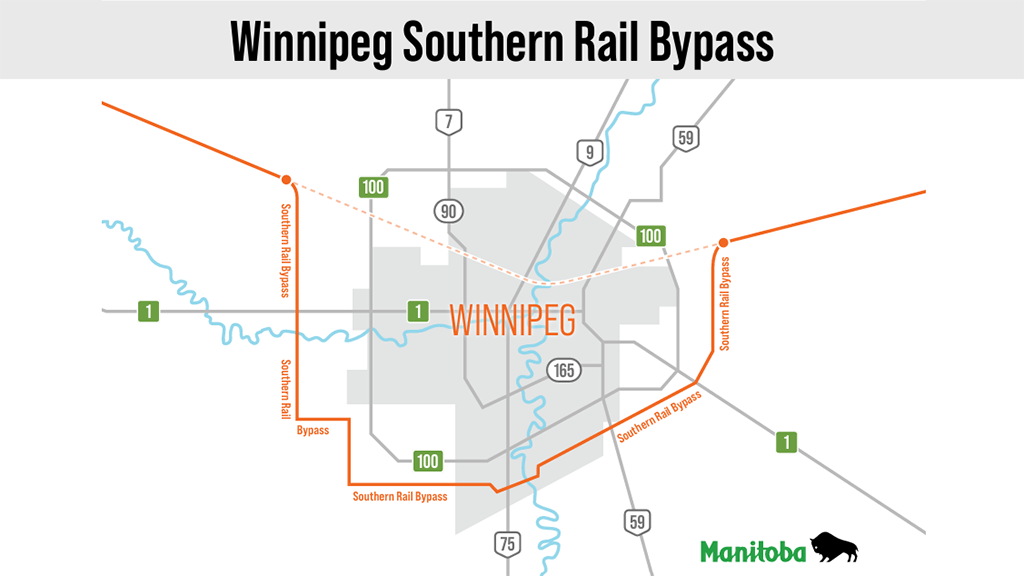
The Manitoba government has initiated a feasibility study for a proposed rail bypass around Winnipeg to alleviate urban congestion caused by freight traffic. This initiative aims to enhance trade connections and open avenues for housing development.
The city of Winnipeg, strategically located at the confluence of the Red and Assiniboine rivers, has experienced substantial growth influenced by its extensive rail infrastructure, including over 240 kilometers of active rail lines. Daily, approximately 50 trains traverse through both residential and commercial districts, a fact that has led to growing concerns among residents about the impact of this rail traffic. In response, the Government of Manitoba is currently evaluating a proposal spearheaded by former politician Lloyd Axworthy that seeks to construct a rail bypass around the city. The main objective of this proposed rail relocation is to alleviate urban traffic congestion and to move major rail marshalling yards away from the city center. To assess the feasibility of this initiative, the government has launched a 90-day study along with a consultation process aimed at gathering insights on the concept.Proponents of the rail bypass argue that moving freight operations outside of Winnipeg's urban core will not only streamline the logistics of goods transport but also mitigate the environmental nuisances such as noise and dust that afflict nearby neighborhoods. Furthermore, the relocation could unlock new potential for housing developments and bolster economic growth. It is important to note that the current study will not delve into detailed engineering plans or financial projections but will instead build upon the groundwork established by the Winnipeg Rail Relocation and Renewal Study initiated in 2024.
The proposed route for the bypass is intended to follow Manitoba Hydro's southern transmission corridor, which is situated on Crown land that has been previously cleared and prepared for development. Axworthy described this proposal as a pivotal moment for Winnipeg, emphasizing the importance of planning for the city’s future growth in a way that fosters community cohesion and environmental stewardship. Premier Wab Kinew has committed to collaborating with the railway companies affected by this potential relocation—including Canadian Pacific Kansas City, Canadian National, and Burlington Northern Santa Fe—to ensure a viable business case can be established.
Kinew noted that this bypass could enhance Manitoba's trade links, facilitating better north-south and east-west connections and significantly benefiting CentrePort Canada Inc (CPC), the industrial park located near Winnipeg's airport. Carly Edmundson, the president and CEO of CPC, expressed confidence in the benefits of rail relocation, stating that it would strengthen the rail network and improve freight efficiency while also creating a clearer separation between residential and commercial zones in Winnipeg.
Experts like Ahmed Shalaby, a civil engineering professor at the University of Manitoba, highlight the potential for rail relocation to reconnect neighborhoods divided by rail lines and transform industrial areas into vibrant urban spaces. However, he cautioned that such a significant undertaking would necessitate extensive land acquisition, the construction of new crossings, and the establishment of grade separations, which could be financially burdensome and logistically challenging.
Christopher Adams, an adjunct professor of political science at the University of Manitoba, expressed a cautiously optimistic viewpoint regarding the proposal, suggesting that its impact could rival that of the Red River Floodway, which has historically protected the city from flooding. He acknowledged the need for extensive coordination with rail companies and substantial financial investment from government sources, especially given the current fiscal pressures on both provincial and federal budgets.
Contrarily, Chris Lorenc, president and CEO of the Manitoba Heavy Construction Association, expressed skepticism about the feasibility of rail relocation, suggesting that rail rationalization, which includes the abandonment of underutilized rail lines, might be a more pragmatic approach. He pointed out the pressing transportation needs within Winnipeg that could be addressed more swiftly than the long-term project of rail relocation, which he estimated could take decades to realize. Moreover, he noted that rail companies have historically shown reluctance to engage in discussions about relocation.
Terry Cunha, a spokesman for CPKC, emphasized the complexity of evaluating rail infrastructure relocation, warning that the challenges and costs associated with such proposals are often underestimated. He reiterated that any successful relocation would likely require significant public funding to replace existing infrastructure effectively. As the feasibility study progresses, the future of Winnipeg's rail traffic and its implications for urban development remain uncertain, but the dialogue surrounding potential relocation continues to evolve.
🏷️
Rail Bypass
Crown land
Housing Opportunities
rail relocation
urban development
Freight Traffic
economic development
Winnipeg
Infrastructure
Transportation
← Previous Post
B.C. Government Admits to $1.46 Billion Overstatement in Natural Gas Revenue Forecasts2 months ago
Next Article →
VRCA Urges Municipal Candidates to Address Construction Costs Ahead of Elections2 months ago
Related Posts