Cape Breton University Launches Innovative $59.8 Million Medical School to Address Doctor Shortage
📅 2 months ago
Cape Breton University opens its new medical school designed to enhance rural family medicine education amid a doctor shortage in the region.
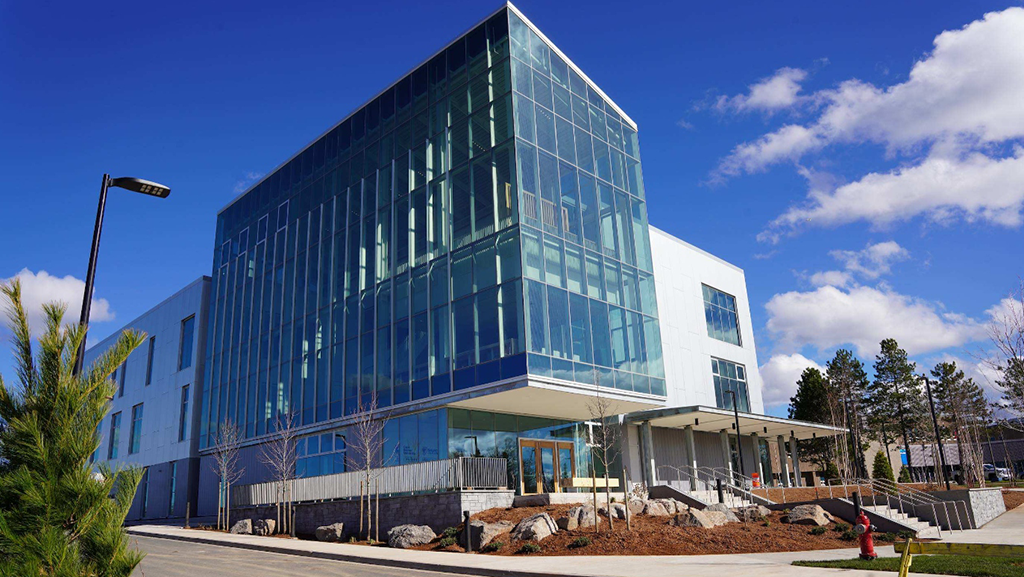
This month, Cape Breton University (CBU) has welcomed its second cohort of 30 students to its newly established medical school, a significant investment totaling $59.8 million. The striking three-storey building, designed by Perkins&Will’s Toronto office in collaboration with Sydney-based Trifos Design Consultants, showcases an open glass feature complemented by wood and beige accents, designed to maximize natural light and highlight a signature staircase. The architectural layout fosters a collaborative teaching environment, equipped with advanced technology and multiple screens for accessing remote lectures provided by Halifax’s Dalhousie University and its satellite school in St. John, New Brunswick. Notably, the three campuses will share lecture responsibilities, enhancing the educational experience.The establishment of this long-awaited school is a strategic response to the pressing shortage of doctors in Cape Breton. Colin Macdonald, the building manager for CBU, emphasized that the primary focus during the construction was to bolster rural family medicine. He noted that students at the Halifax campus often prefer to remain in urban settings after graduation, leading to a lack of practitioners in rural areas.
Construction of the medical school commenced in December 2024, with the design and construction processes running concurrently, according to Macdonald. The second floor houses most of the teaching modules, which are packed with advanced technological features. This includes simulated patient suites where students can engage in realistic practice scenarios akin to those encountered by practicing doctors. High-fidelity suites designed for specific clinical skills are also located on this floor, providing an immersive learning environment.
The interior design promotes an open atmosphere conducive to engagement, with spaces allowing for breakout sessions following tutorials. A notable feature is the two-way glass that facilitates observation from a master control room, enabling supervising physicians to monitor and guide students' practices. Macdonald confidently stated that the building is comparable to contemporary teaching facilities across North America, citing the extensive data cabling infrastructure as a testament to its advanced technological capabilities.
The integration of technology is crucial, as it enables all three Dalhousie campuses to share teaching resources effectively, especially important for a satellite campus where medical teaching expertise is limited. The challenges in staffing medical teaching practicums are alleviated, allowing a single professor to conduct lectures for multiple campuses simultaneously.
In addition to the advanced classrooms, the facility includes standard educational spaces and collaborative lounges designed to foster relaxed yet productive discussions among students. The finishes throughout the building mimic those of a typical hospital room, reinforcing the connection to medical training.
Despite the successful launch of the medical school, there were challenges associated with its development. Macdonald recalled that after the funding announcement, there was a rush to prepare the facility for its first cohort of students, which he deemed a challenging timeline due to a shortage of skilled tradespeople. This shortage is exacerbated by a construction boom in Cape Breton, illustrated by the presence of tower cranes across the island for the first time in decades. Significant projects underway include expansions at the Cape Breton Regional Hospital and the new waterfront campus for Nova Scotia Community College in downtown Sydney.
Macdonald also noted a rising trend in housing development and other projects, indicating a population increase in Cape Breton for the first time since the 1960s. However, he expressed concern over the limited availability of trade resources on the island, highlighting the empty union halls and the high demand for available workers. He remains hopeful for increased training opportunities in the future.
🏷️
skilled trades
rural medicine
collaborative learning
healthcare education
infrastructure development
Cape Breton University
Construction
technology in education
advanced facilities
medical school
← Previous Post
Navigating Risks in Mass Timber Projects: Legal Insights and Contractual Challenges2 months ago