
New Insights into Corrosion Detection in Post-Tensioned Bridge Infrastructure from Champlain Bridge Study
📅 2 months ago
🏷️ Giatec Scientific Inc.
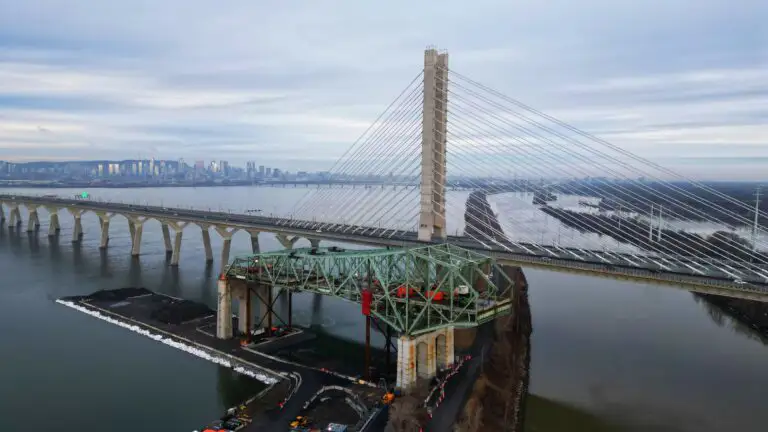
A comprehensive study on the Champlain Bridge's post-tensioned concrete deck reveals critical insights into detecting hidden corrosion, emphasizing the need for multi-technique non-destructive testing methods.
The management of concrete bridge infrastructure presents unique challenges, particularly with post-tensioned (PT) systems, where hidden risks often go unnoticed. Unlike standard reinforced concrete decks, where early signs of corrosion manifest as rust stains, cracking, and spalling, PT systems conceal high-strength steel strands within ducts embedded deep in the concrete. These strands are susceptible to corrosion from de-icing salts and moisture that can infiltrate through microcracks or joints, resulting in localized damage that can compromise structural integrity while the surface appears intact.The decommissioning of Montreal's historic Champlain Bridge provided an exceptional opportunity to study this phenomenon in detail. Instead of relying on small-scale laboratory tests, researchers extracted full-scale PT roadway deck slabs that had withstood nearly sixty years of heavy traffic and extreme Canadian weather conditions. These slabs were then subjected to extensive non-destructive testing (NDT) and structural evaluation at the University of Ottawa’s Structures Laboratory.
One of the key findings from this investigation is that visual assessments are inadequate for evaluating the integrity of PT systems. Many areas of the deck that showed no visible damage were found to harbor internal grout voids and significant corrosion of the prestressing wires. To overcome this challenge, the study utilized acoustic methods such as Impact Echo (IE) and Ultrasonic Pulse Echo (UPE), which proved effective in uncovering internal defects that could otherwise remain hidden.
The research also highlighted the vulnerability of joints, where wire section loss and corrosion activity were particularly pronounced near duct ends and construction interfaces. These critical areas act as conduits for moisture and chloride ingress, leading to accelerated deterioration. This observation was further substantiated through gravimetric mass loss measurements on the extracted wires, reinforcing the need for targeted assessments in these zones.
Moreover, the study concluded that no single NDT method is sufficient for a comprehensive evaluation of embedded tendons. Instead, a multi-technique approach is essential. For instance, Ultrasonic Pulse Velocity (UPV) measurements correlated with corrosion rates, while UPE and IE effectively pinpointed areas of high corrosion risk. However, the researchers noted that NDT data alone cannot replace physical load testing to ascertain the remaining structural capacity of the bridge.
To facilitate better assessments, the study proposed an Integrated Multi-Technique Field Assessment Protocol. This involves a structured application of various NDT tools to create a definitive diagnostic roadmap. The assessment unfolds in phases, starting with Ground Penetrating Radar (GPR) and surface electrical resistivity mapping to establish tendon profiles and identify moisture ingress areas. Following this, IE and UPE focus on critical structural zones, while half-cell potential measurements and corrosion rate monitoring confirm active corrosion along tendon lines.
The final phase emphasizes targeted interventions, allowing asset managers to replace high-risk exploratory coring with focused inspections based on detailed diagnostic maps. This strategic approach not only prioritizes necessary repairs but also extends the service life of aging bridge infrastructure.
In conclusion, the findings from the Champlain Bridge's deck slabs underscore the inadequacy of visual inspections in detecting severe internal corrosion. The research advocates for a transition within the bridge management sector from reactive screening methods to standardized, multi-technique diagnostic frameworks. By adopting this integrated NDT approach, asset managers can enhance rehabilitation strategies and effectively manage budgets while ensuring the longevity of critical infrastructure.
🏷️
electromagnetic testing
electrochemical testing
acoustic testing
civil engineering
Champlain Bridge
non-destructive testing
post-tensioned concrete
corrosion detection
structural health monitoring
infrastructure maintenance
Related Posts