Environmental Groups Urge Ottawa to Revise Major Projects Legislation to Protect Southern Resident Orcas
📅 2 months ago
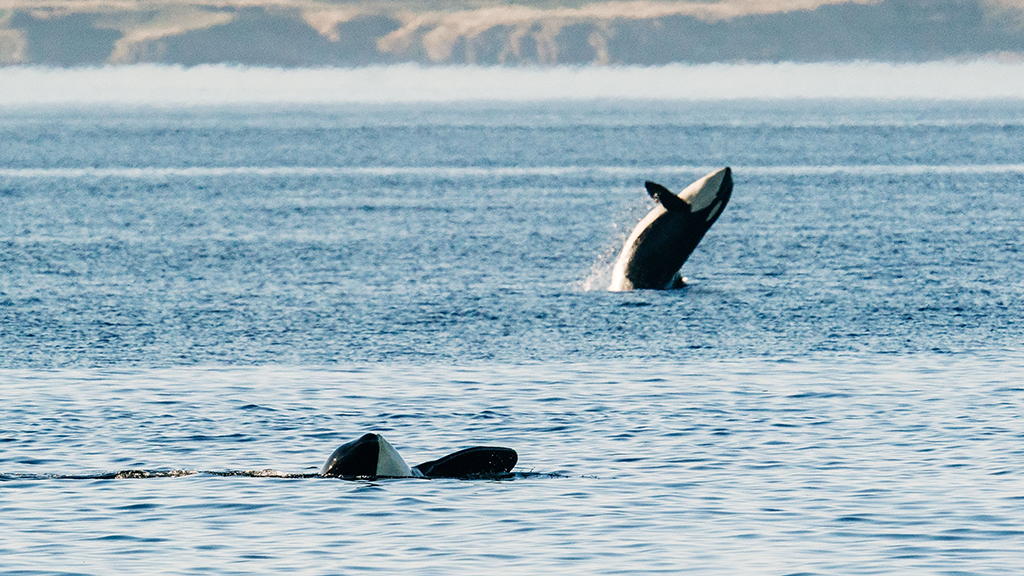
Leading environmental organizations are calling on the Canadian government to amend proposed legislation that could impact the Southern Resident Orcas as it prepares to introduce new project review processes this fall.
OTTAWA — A coalition of Canada’s foremost environmental organizations is advocating for modifications to forthcoming legislation intended to expedite the development of significant projects, as the government prepares to present it this fall. Environmental Defence has initiated an advertising campaign aimed at spotlighting the precarious situation of the Southern Resident Orcas, claiming that these whales face increased risks if the federal government advances a bill that alters the current project review process.The organization has expressed alarm over Ottawa’s proposal to create "economic zones" designated for transportation corridors, telecommunications networks, and energy production and transmission. Such zones would empower the federal cabinet to determine allowable activities and grant ministers the authority to pre-approve specific projects.
Julia Nevin, an associate director at Environmental Defence, shared insights with The Canadian Press, stating, "We’ve heard from MPs that changes are being considered from what was drafted initially. However, the government has remained silent regarding the direction of these changes, particularly concerning protections for species."
In May, Ottawa published two discussion papers that included proposals to shift the responsibility for reviewing pipelines, transmission lines, and offshore renewable energy projects from the Impact Assessment Agency to the Canada Energy Regulator. The government has justified this transition by asserting that the expertise required for energy projects is not present within the Impact Assessment Agency.
Initially, feedback on the proposals was due by June 7, but following significant criticism, particularly from environmental and Indigenous groups, the deadline was extended to July 22. Additionally, the timeline for tabling the legislation was pushed to coincide with the fall parliamentary session, which commences on September 21. The government reported receiving over 21,000 emails regarding the proposed changes and aims to finalize a summary report on the consultations by the end of summer. However, a spokesperson for the Prime Minister’s Office noted that there was no current update on the report's status.
There are also plans to exempt certain projects from established laws that protect species at risk. The Marine Mammal Commission, an independent agency of the U.S. government, has indicated that as of July 2025, only 74 Southern Resident Orcas remain. This species is safeguarded in Canada under the Species At Risk Act. Environmental Defence highlights that the whales inhabit the Salish Sea, the exact waters through which oil and LNG tankers must pass, stating that the underwater noise created by these vessels hinders the orcas’ ability to hunt, communicate, and navigate, thereby pushing them toward extinction.
In a separate initiative, Ecojustice has labeled the upcoming legislation the "orca extinction bill" and recently launched its own media campaign. This follows Ottawa’s move to classify the Roberts Bank Terminal 2 as a project of national interest. The government contends that this terminal would augment the Port of Vancouver’s container capacity by nearly 50 percent and help double Canada’s exports to non-U.S. markets by 2035. The designation as a project of national interest under the Building Canada Act would enable the government to bypass the Species At Risk Act to allow the project to proceed.
Furthermore, Ottawa is proposing to grant cabinet ministers limited powers to exempt projects from the "jeopardy test" for species at risk, but only if it aligns with public interest and if the project proponents have made reasonable efforts to mitigate impacts on endangered species. Ecojustice has criticized this proposal, asserting that it could create loopholes for projects to circumvent vital protections designed to prevent endangered species from facing further threats.
In June, during a lobbying effort on Parliament Hill against these proposals, Prime Minister Mark Carney firmly stated that the government was "absolutely not" abandoning environmental protections in its legislative efforts.
🏷️
energy production
Southern Resident Orcas
environmental protection
telecommunications networks
species at risk
economic zones
Impact Assessment Agency
Roberts Bank Terminal 2
infrastructure development
Canada Energy Regulator
← Previous Post
Deloitte Report Highlights Economic Risks of Potential U.S. Withdrawal from CUSMA2 months ago
Next Article →
New Legislation Introduced to Address High Suicide Rates Among Construction Workers2 months ago
Related Posts