
Deloitte Report Highlights Economic Risks of Potential U.S. Withdrawal from CUSMA
📅 2 months ago
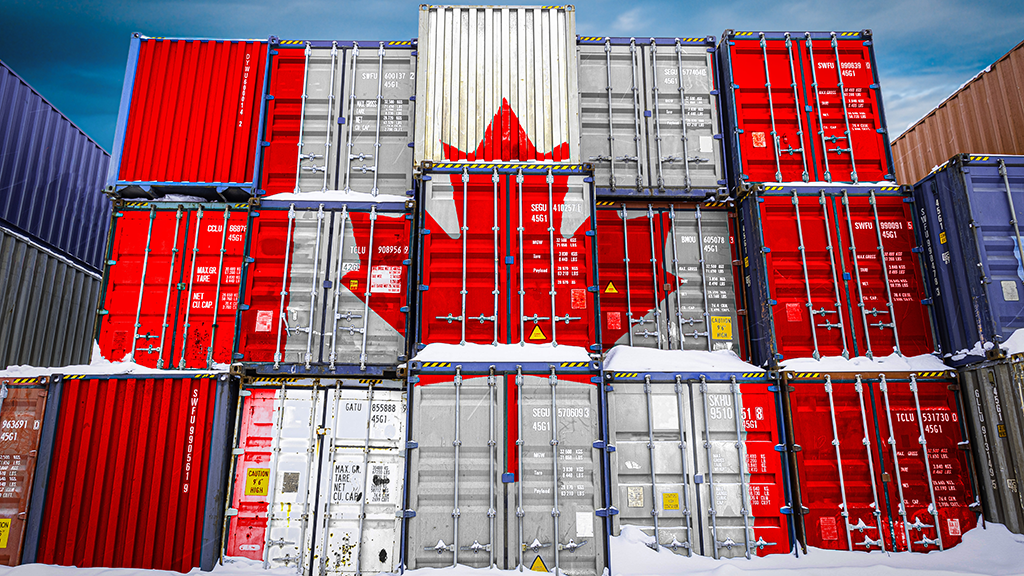
A recent Deloitte report outlines the economic implications for Canada if the U.S. were to withdraw from the North American trade pact, emphasizing the need for diversification and internal trade reforms.
OTTAWA — A new report from Deloitte Canada underscores the potential economic fallout for Canada should the United States withdraw from the North American trade agreement known as CUSMA (Canada-United States-Mexico Agreement). The report argues that while diversifying trade with a broader range of international partners could mitigate some of the adverse effects, it would not fully compensate for the losses incurred from such a withdrawal. To effectively address this economic challenge, the authors recommend that Canada also focus on eliminating interprovincial trade barriers and nurturing new industries.The report, titled "Tariffs: A Rough Road Leads to New Destinations," provides a detailed analysis of both best-case and worst-case scenarios for the Canadian economy amidst ongoing cross-border trade tensions. Matthew Stewart, a partner at Deloitte Canada and co-author of the report, stated, "What we wanted to do is to get a better picture around what’s the impact if the worst happens and the (Canada-U.S.-Mexico) agreement falls apart, and then how much can we offset of the negative impact?"
In the worst-case scenario, the dissolution of CUSMA is deemed a plausible outcome. Currently, the U.S. accounts for approximately 70 percent of Canada’s exports as of 2025. Should the trade agreement collapse, the report predicts that Canada’s real gross domestic product (GDP) could decrease by 1.6 percent, equating to a loss of $402 billion over the next decade, compared to the existing baseline of U.S. tariff levels as of July 1 of this year and CUSMA remaining intact. Furthermore, it projects an annual average job loss of 163,000, which would subsequently reduce wages and consumer spending.
The report's authors emphasize that while the overall economic impact would be severe, it may not be catastrophic for the entire economy. However, certain sectors could face dire consequences. Manufacturing, in particular, would suffer significantly, with motor vehicles and parts projected to experience a 28 percent decline in real GDP relative to the baseline. Other affected sectors include electronics, machinery and equipment, which would see a 21 percent loss, rubber and plastics products at 20 percent, and chemicals at 13 percent by the year 2036.
Additionally, the model considers the oil and gas sector, which would no longer benefit from exemptions to a potential 10 percent global tariff imposed by the U.S. The report anticipates an 11 percent decrease in oil sales to the U.S. and a staggering 30 percent decline in natural gas exports.
Conversely, the best-case scenario suggests that Canada can maintain its existing free-trade agreements, including CUSMA, while also pursuing new trade agreements. In this scenario, real GDP could increase by 0.6 percent or $141 billion over the next decade, with the creation of nearly 53,000 jobs annually. The sectors poised to benefit the most would include agriculture, particularly through expanded trade with countries like China and India, along with various manufacturing sectors.
The report advocates for Canada to go beyond merely seeking new markets for its established products. It stresses the importance of implementing policies that promote self-sufficiency, which entails dismantling internal trade barriers and fostering new areas of specialization that could enable Canada to compete effectively in global markets.
Positive steps highlighted in the report include the Canadian government’s significant investments in defense and the support for new export infrastructure, as well as critical minerals refining. Deloitte's research posits that completely eliminating interprovincial trade barriers over a five-year period could result in an additional $881 billion in economic output by 2040 and create 133,000 new jobs.
Stewart expressed cautious optimism regarding these prospects, stating, "I don’t think all of this would be easily attainable, but I think we could at least achieve half of that. Together with the diversification and more open internal trade, we could offset most of the decline from a worsening situation with the United States."
🏷️
economic impact
agriculture
interprovincial trade
employment
CUSMA
U.S. trade
trade agreements
manufacturing
Canada
oil and gas
← Previous Post
Las Vegas Stadium Authority Allocates $75 Million for Upgrades to Allegiant Stadium2 months ago
Next Article →
Environmental Groups Urge Ottawa to Revise Major Projects Legislation to Protect Southern Resident Orcas2 months ago
Related Posts