
Navigating Workforce Challenges in the Construction Industry: The Art and Science of Labor Forecasting
📅 5 months ago
🏷️ Bridgit
The construction industry faces significant workforce challenges, with many contractors struggling to secure the labor needed for new projects. This article explores the complexities of labor forecasting, the importance of combining data analysis with experiential knowledge, and strategies for improving workforce planning in a rapidly changing environment.
At a recent industry conference, a familiar face shared their excitement over securing three major projects. However, their enthusiasm was overshadowed by evident exhaustion. "We bid these jobs assuming we had the people," they confided, revealing a stark reality that many in the construction sector are grappling with: the struggle to deliver on promises made during the bidding process. The construction industry is currently under significant pressure, making effective workforce planning more challenging than ever.A staggering 86% of contractors have found themselves in situations where they have bid on projects only to realize that they do not have the workforce necessary to complete them. This is not merely a staffing issue; it reflects a deeper problem of misalignment between commitments made and actual capabilities. When contractors cannot staff the projects they have won, their bidding strategy transitions from a competitive advantage to a liability, complicating their operational landscape.
The urgency of the situation is underscored by the fact that the U.S. construction industry requires 439,000 net new workers. Unfortunately, the pipeline for new talent is not filling fast enough. Reports indicate that 93% of construction leaders acknowledge that labor shortages are directly impacting their operations. The ramifications are visible across the board: increased costs that erode profit margins, missed opportunities to take on new work despite a strong project pipeline, and heightened employee burnout as teams stretch themselves to cover staffing gaps.
Turnover rates within the industry average 21.4%, indicating that one in five crew members will not return the following year. This constant churn necessitates ongoing recruitment and training efforts just to maintain existing capacity, let alone achieve growth. Alarmingly, 45% of contractors have cited project delays directly tied to workforce issues. These delays are not minor; they lead to difficult conversations with clients about missed deadlines and potential financial penalties.
The labor shortage is compounded by other factors that complicate forecasting. For instance, tariffs have inflated steel and aluminum costs by 25%, disrupting project timelines significantly. Material delays create a domino effect that impacts workforce scheduling. For example, if steel deliveries are delayed, electricians who were planned for July may not be available when their work is pushed to September, as they may be committed to other projects. Additionally, unpredictable weather can extend construction timelines by 15-25%, further complicating scheduling and resource allocation.
Moreover, shifts in immigration policies are affecting one-third of construction firms, tightening labor markets in ways that historical averages cannot predict. As a result, industry leaders are feeling increasingly uneasy, with 99% planning to invest at least $100,000 in workforce planning tools this year. Labor forecasting has become essential for maintaining efficiency in an environment that penalizes inaccurate predictions.
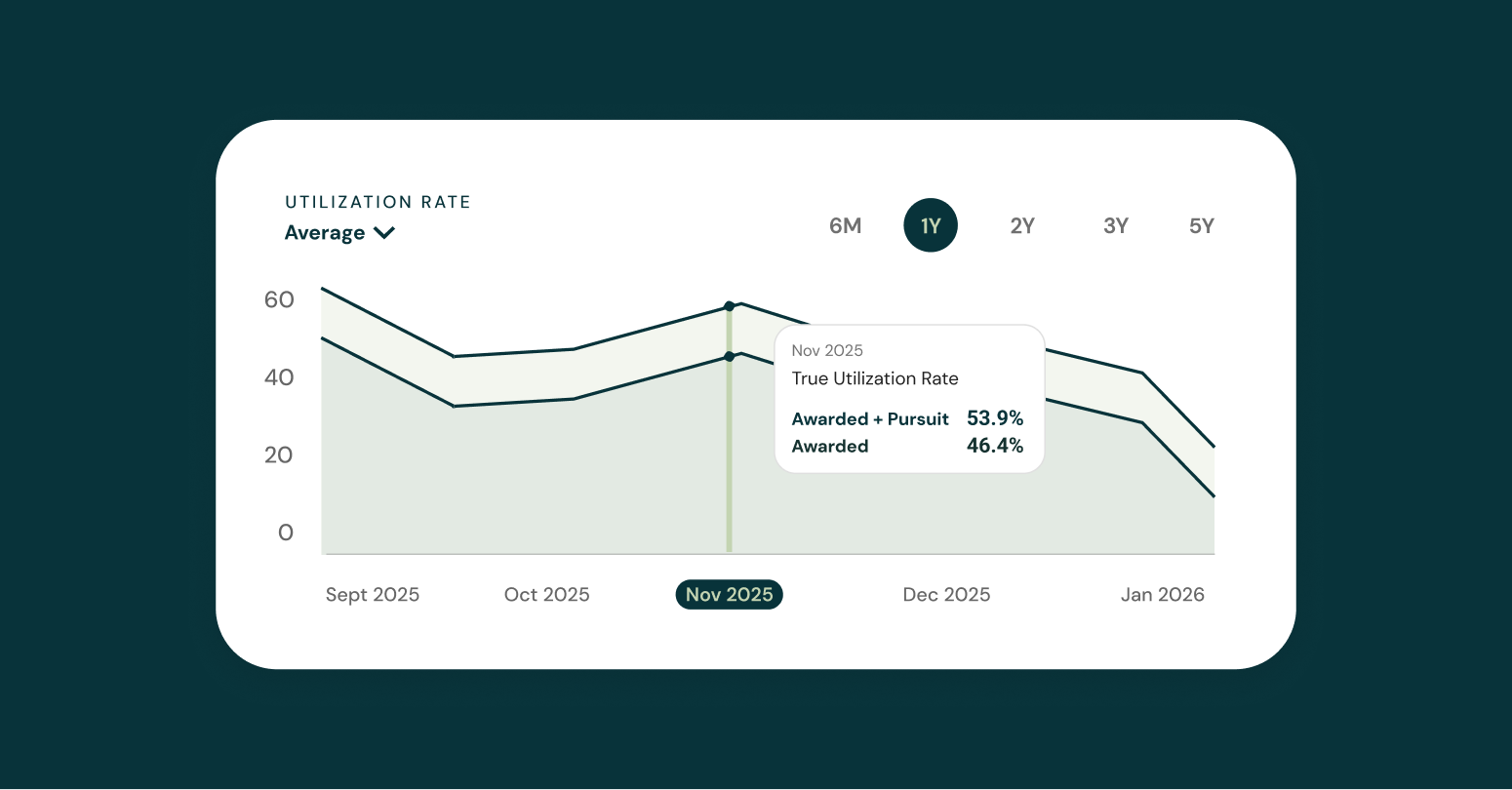
Contractors possess a wealth of data on past projects, which can be invaluable for labor forecasting. By analyzing crew size, utilization rates, and completion times, trends can be identified that inform future workforce needs. However, companies need three to five years of historical data across various project types to make accurate forecasts. Understanding seasonal fluctuations and average hiring timelines for different positions is crucial, as it allows for proactive planning rather than reactive scrambling when gaps arise.
While historical data provides a solid foundation, it is essential to account for unpredictable factors that may arise. For instance, sudden tariff impacts on material availability or immigration policy changes can create labor supply constraints that historical data does not capture. Data can provide a baseline, but successful forecasting also requires qualitative insights, such as project managers' experiences and understanding of crew dynamics.
The art of labor forecasting lies in the ability to blend quantitative data with qualitative judgment. Knowing which crew members excel in specific scenarios or have unique skill sets can greatly influence project outcomes. Scenario planning can further enhance this approach by preparing for multiple potential futures, whether that be strong economic growth or severe labor constraints.
Ultimately, effective labor forecasting is a combination of solid historical data and real-time adjustments based on current conditions and insights. As the construction industry continues to evolve, those who master both analytical tools and market intuition will be better positioned to navigate the challenges ahead and thrive in an increasingly competitive landscape.
🏷️
project management
workforce planning
data analytics
labor shortages
construction technology
employee turnover
labor forecasting
Contractors
tariffs
construction industry
← Previous Post
Bridgit Expands AI Workforce Planning Solutions to Specialty Contractors5 months ago
Next Article →
Bridgit Addresses Disconnected Data Challenges in Construction with CRM Integration5 months ago
Related Posts