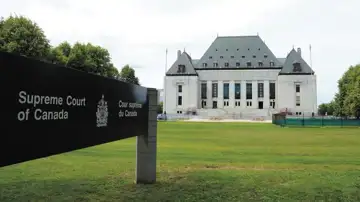
Ontario Court Allows Removal of Bike Lanes in Toronto
📅 3 months ago

The Ontario Court of Appeal has ruled that the province can remove bike lanes in Toronto, overturning a lower court's decision that deemed the plan unconstitutional and a risk to cyclist safety.
In a significant legal development, the Ontario Court of Appeal has ruled that the provincial government has the authority to eliminate bike lanes in Toronto. This decision reverses a previous ruling made by the Superior Court, which had determined that the removal of these lanes posed an unconstitutional risk to the safety of cyclists. The Appeal Court's ruling underscores that there is no constitutional right to bike lanes, thereby allowing the government to modify or revoke policies established by prior administrations, even when such actions contradict expert recommendations.The ruling was articulated by Justice Grant Huscroft, who criticized the lower court's interpretation of the law and suggested that it had exceeded its jurisdiction by involving itself in matters of policy and political decision-making. Justice Huscroft stated, "something has gone wrong," indicating a strong disagreement with the earlier judgment.
Initially, Superior Court Justice Paul Schabas had ruled against the government's initiative to remove protected bike lanes located on major thoroughfares, including Bloor Street, Yonge Street, and University Avenue. Schabas’s ruling emphasized that the government's plan would likely exacerbate risks to cyclists, potentially leading to increased accidents, injuries, and fatalities. He pointed out that the government's own advisers, as well as external experts, largely concurred that the removal of the bike lanes would not achieve its intended goal of reducing traffic congestion and might, in fact, have the opposite effect.
This ruling has significant implications for urban planning and transportation policy in Toronto, as it sets a precedent that may affect future decisions regarding cycling infrastructure. The court's decision effectively empowers the provincial government to make substantial changes to existing transportation policies without the obligation to adhere to expert opinions or prior commitments.
The debate over bike lanes in Toronto has been contentious, with advocates arguing for enhanced cycling infrastructure to promote safety and sustainable transportation, while opponents often cite concerns over traffic flow and parking. The Ontario Court of Appeal's ruling may intensify these discussions, particularly as the city continues to grapple with issues of urban mobility and safety.
The timeline for any changes resulting from this ruling is currently unclear, but the decision could catalyze a shift in how transportation policies are formulated in the province. As the government moves forward, it will be essential to monitor public response and any subsequent policy revisions that may arise in the wake of this legal ruling.
🏷️
Urban planning
traffic congestion
cycling infrastructure
court ruling
transportation policy
Toronto
safety
bike lanes
government policy
Ontario
← Previous Post
Groundbreaking Ceremony Marks Launch of $2.2 Billion Rook I Uranium Project in Saskatchewan3 months ago
Next Article →
Doka Canada Expands Footprint in Metro Vancouver with New Lease on Annacis Island3 months ago