Ontario-Quebec High-Speed Rail Project Gains Momentum at Transport Futures Conference
📅 1 day ago
The Ontario-Quebec high-speed rail project, spearheaded by Alto and Cadence, showcases international expertise while addressing community concerns and project logistics at the recent Transport Futures conference in Toronto.
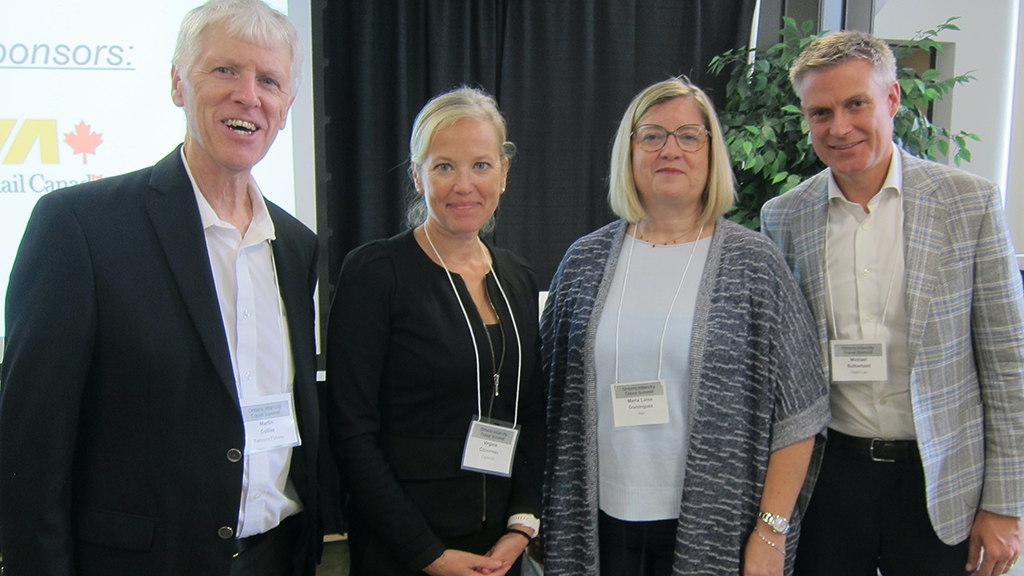
At a recent conference in Toronto, advocates for the Ontario-Quebec high-speed rail (HSR) project emphasized their extensive international experience in high-speed rail systems and committed to ongoing consultations with affected communities. The event, part of the Transport Futures initiative, took place on October 2 and featured key presentations from representatives of Alto, a crown agency established in 2022, and Cadence, a private consortium that includes CDPQ Infra, AtkinsRealis, SYSTRA Canada, Keolis Canada, SNCF Voyageurs, and Air Canada.Maria Luisa Dominguez, chief project management officer of Alto, and Virginie Cousineau, senior director of public affairs for Cadence, described the initiative as a vital mobility “backbone” for Eastern Canada, connecting cities from Toronto to Quebec City. The project aims to integrate various modes of transport, including aviation, buses, and commuter rail, to facilitate a significant modal shift in travel patterns.
Drawing on examples from Spain, Dominguez highlighted how high-speed rail transformed travel dynamics between Madrid and Seville in the 1990s, shifting travel preferences from cars to rail significantly within just a few years. Currently, around 90 percent of travel in the Toronto-Quebec City corridor is conducted by car, illustrating the potential for change with the introduction of HSR. The proposed route includes seven primary stops: Toronto, Peterborough, Ottawa, Montreal, Laval, Trois-Rivières, and Quebec City, with Kingston being evaluated as a potential additional stop.
The federal government has allocated $3.9 billion to date for project development and pre-construction planning. However, concerns were raised during the conference regarding projected ridership, necessary subsidies, and the overall costs and benefits of the project. A parliamentary budget officer recently estimated the construction costs to range from $75 billion to $113 billion, a notable increase from the government’s previous estimate of $60 billion to $90 billion.
Martin Collier, founder of Transport Futures, expressed a belief that the HSR project is likely to proceed, although he indicated that financial considerations could influence its future. He noted that the current political majority in the federal government could play a significant role in the project’s viability.
Cousineau, who previously worked on Montreal’s REM project, emphasized the importance of establishing trust with communities during the planning process. She acknowledged the challenges posed by introducing new infrastructure and stressed the need for ongoing dialogue with stakeholders.
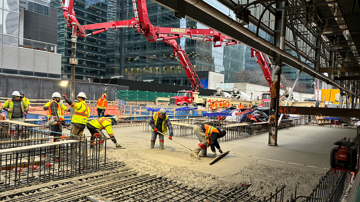
The central section of the rail line, connecting Ottawa to Montreal, will be the first to undergo procurement and construction. This initial phase will encompass rail infrastructure, stations, tunnels, rolling stock, and integrated rail systems. Cadence has already issued a Request for Expressions of Interest (RFEOI) for rolling stock, with responses due by January 4, 2027. Further RFEOIs for systems and civil infrastructure are planned throughout 2027, with a tight procurement schedule outlined.
Subject to government approvals, construction on the Ottawa-Montreal segment is anticipated to commence around 2029-30, with subsequent segments to follow. Both Alto and Cadence plan to initiate construction on the eastern and western segments concurrently, ahead of the central segment’s completion.
During one of the conference's afternoon sessions, Chiefs of Ontario Regional Chief Abram Benedict addressed the opportunities for Indigenous communities within the project. Cousineau reiterated that Indigenous considerations would be integral to every aspect of the design, impact assessments, and business opportunities related to the project. She noted the importance of preparing and training a Canadian workforce for the construction and operation of the rail system.
As the project progresses, Cousineau indicated that the second phase of consultations would involve direct engagement with communities to better understand their concerns. Dominguez added that while the final alignment of the rail corridor is not yet determined, consultations with affected landowners are planned for November and December. Once the alignment is finalized, they will begin land acquisition for the early works, expected to start by the end of next year. Dominguez also mentioned that as more details are finalized, the business case for the project will be developed, with an announcement regarding more precise capital costs forthcoming from government officials.
🏷️
Indigenous opportunities
community consultation
Quebec
high-speed rail
Transportation
modal shift
Ontario
sustainable travel
Infrastructure
construction timeline
← Previous Post
Toronto Mayoral Candidates Focus on Affordability and Housing Ahead of Elections1 day ago
Next Article →
D.R. Horton Partners with Promise Robotics to Enhance Homebuilding Production with AI Technology1 day ago