Innovative Approaches Drive $63.7 Million Rehabilitation of Four Toronto Bridges
📅 2 months ago
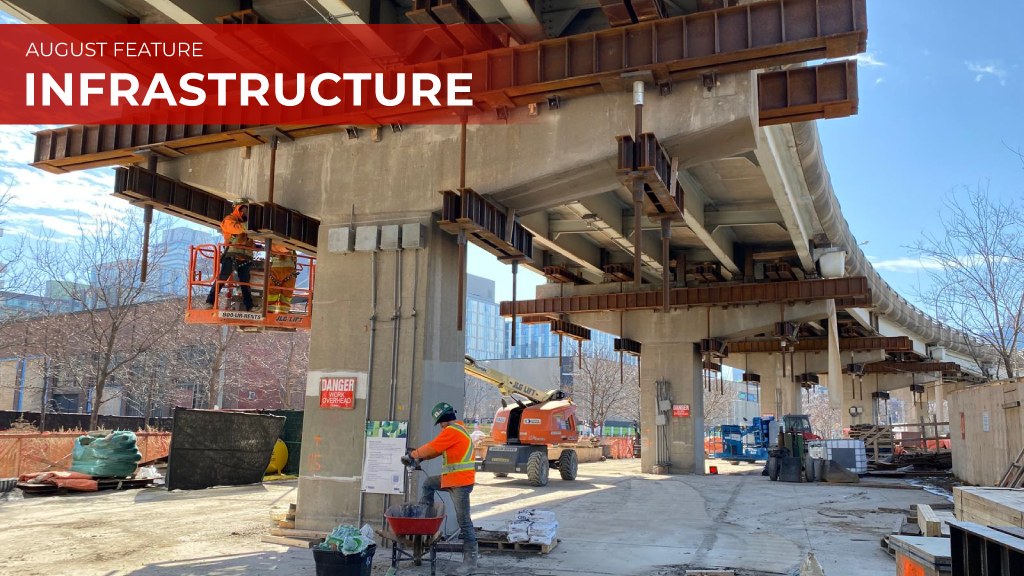
A significant $63.7 million project aimed at rehabilitating four aging bridges in east-end Toronto is currently underway, with a projected completion date set for early 2027. This initiative has been in progress since 2024 and involves approximately 1.5 kilometers of bridge work. The project encompasses the Eastern Avenue Bridge, the Richmond Street East Bridge—which crosses over King Street East—the Adelaide Street East Bridge, and the Don Valley Parkway off ramp that spans the Don River and connects with Richmond Street.
Soncin Construction has been appointed as the general contractor for this extensive rehabilitation effort, which includes a comprehensive list of tasks focused on both the top and underside of the bridges. Some of the key activities involve replacing expansion joints and reconstructing deck overhangs and parapet walls. Stantec is serving as the consulting firm for the project, which is now nearing its final phases. According to Jennifer Graham Harkness, the chief engineer for Toronto, the bridges were originally constructed in 1963 and last underwent rehabilitation in 1992. This current project is a vital component of the city’s State of Good Repair initiative, aimed at maintaining infrastructure integrity.
In light of the high traffic volume in the vicinity of these four bridges and other unrelated construction projects in the area, the city undertook extensive long-range planning before initiating this project. Graham Harkness noted the importance of balancing construction progress with minimizing congestion. To achieve this balance, innovative techniques have been employed throughout the construction process.
One notable example is the use of a specialized Rapid Deployment Unit system by Harrison Muir Inc., which allowed for the coating of the structural steel beneath the bridges without necessitating lane closures on the Don Valley Parkway—a major north-south highway known for its heavy traffic. This enclosed access enabled workers to perform sandblasting and coating operations safely over live traffic. Coordination with organizations such as Metrolinx, Waterfront Toronto, and private developers has also been crucial in reducing the impact on ongoing projects.
As the project progresses, most of the complex rehabilitation work on the four bridges has been finalized, although undercoating and additional tasks are expected to extend into early next year. Graham Harkness highlighted the strategic scheduling of rehabilitation work on the Don Valley Parkway off ramp to avoid conflicts with regular maintenance conducted by city crews.
Given the intricate nature of the work, multiple specialized crews were mobilized throughout the project, with three to five crews often on-site concurrently. These teams were dedicated to various tasks, including structural jacking, bearing replacement, steel coating, electrical work, paving, waterproofing, and concrete demolition. To expedite the project timeline, the contractor extended working hours and adopted flexible scheduling, with crews working in two extended shifts that spanned roughly 20 hours within a 24-hour period.
The most intensive construction phases occurred during the full closure of the Don Valley Parkway off ramp from fall 2025 until its reopening this past spring. Over 80 overnight shifts were utilized to accelerate critical rehabilitation efforts, and weekend work was strategically planned, including frequent Saturday work and selective operations on Friday and Sunday nights, depending on construction needs.
While the project is fundamentally tied to the city’s good repair policy, Graham Harkness acknowledged that the acceleration of work on the Don Valley Parkway off ramp was partly influenced by the scheduling of the FIFA games. Despite the initial plan to proceed with construction during the games, the city opted to fast-track the project to ensure completion before the events began. Although the bridge site is several kilometers away from Toronto Stadium (also known as BMO Field for FIFA), Harkness emphasized that traffic patterns are interconnected, with potential ripple effects impacting the area.
Ultimately, the primary objective has been to maintain traffic flow and minimize disruptions to the community. This rationale guided the decision to close the Richmond Street off ramp entirely, rather than allowing sporadic work to prolong the construction duration. “Our goal was to get in there, complete the repairs, and then exit the site as swiftly as possible,” she stated. As the project nears its conclusion, the extensive rehabilitation work on the four bridges is a testament to the city’s commitment to maintaining its infrastructure effectively.
Soncin Construction has been appointed as the general contractor for this extensive rehabilitation effort, which includes a comprehensive list of tasks focused on both the top and underside of the bridges. Some of the key activities involve replacing expansion joints and reconstructing deck overhangs and parapet walls. Stantec is serving as the consulting firm for the project, which is now nearing its final phases. According to Jennifer Graham Harkness, the chief engineer for Toronto, the bridges were originally constructed in 1963 and last underwent rehabilitation in 1992. This current project is a vital component of the city’s State of Good Repair initiative, aimed at maintaining infrastructure integrity.
In light of the high traffic volume in the vicinity of these four bridges and other unrelated construction projects in the area, the city undertook extensive long-range planning before initiating this project. Graham Harkness noted the importance of balancing construction progress with minimizing congestion. To achieve this balance, innovative techniques have been employed throughout the construction process.
One notable example is the use of a specialized Rapid Deployment Unit system by Harrison Muir Inc., which allowed for the coating of the structural steel beneath the bridges without necessitating lane closures on the Don Valley Parkway—a major north-south highway known for its heavy traffic. This enclosed access enabled workers to perform sandblasting and coating operations safely over live traffic. Coordination with organizations such as Metrolinx, Waterfront Toronto, and private developers has also been crucial in reducing the impact on ongoing projects.
As the project progresses, most of the complex rehabilitation work on the four bridges has been finalized, although undercoating and additional tasks are expected to extend into early next year. Graham Harkness highlighted the strategic scheduling of rehabilitation work on the Don Valley Parkway off ramp to avoid conflicts with regular maintenance conducted by city crews.
Given the intricate nature of the work, multiple specialized crews were mobilized throughout the project, with three to five crews often on-site concurrently. These teams were dedicated to various tasks, including structural jacking, bearing replacement, steel coating, electrical work, paving, waterproofing, and concrete demolition. To expedite the project timeline, the contractor extended working hours and adopted flexible scheduling, with crews working in two extended shifts that spanned roughly 20 hours within a 24-hour period.
The most intensive construction phases occurred during the full closure of the Don Valley Parkway off ramp from fall 2025 until its reopening this past spring. Over 80 overnight shifts were utilized to accelerate critical rehabilitation efforts, and weekend work was strategically planned, including frequent Saturday work and selective operations on Friday and Sunday nights, depending on construction needs.
While the project is fundamentally tied to the city’s good repair policy, Graham Harkness acknowledged that the acceleration of work on the Don Valley Parkway off ramp was partly influenced by the scheduling of the FIFA games. Despite the initial plan to proceed with construction during the games, the city opted to fast-track the project to ensure completion before the events began. Although the bridge site is several kilometers away from Toronto Stadium (also known as BMO Field for FIFA), Harkness emphasized that traffic patterns are interconnected, with potential ripple effects impacting the area.
Ultimately, the primary objective has been to maintain traffic flow and minimize disruptions to the community. This rationale guided the decision to close the Richmond Street off ramp entirely, rather than allowing sporadic work to prolong the construction duration. “Our goal was to get in there, complete the repairs, and then exit the site as swiftly as possible,” she stated. As the project nears its conclusion, the extensive rehabilitation work on the four bridges is a testament to the city’s commitment to maintaining its infrastructure effectively.
🏷️
State of Good Repair
bridge rehabilitation
Construction
Don Valley Parkway
Stantec
Toronto
FIFA games
Soncin Construction
urban construction
Infrastructure
Next Article →
Ontario Government Announces Over $1 Billion Investment for New Schools and Child Care Spaces2 months ago