Scientific Community Challenges Federal Push for Major Project Reforms
📅 2 months ago
Canada's scientific community is criticizing the federal government's efforts to streamline approvals for major infrastructure projects, warning that such reforms could weaken environmental protections and pose risks to biodiversity and economic stability.
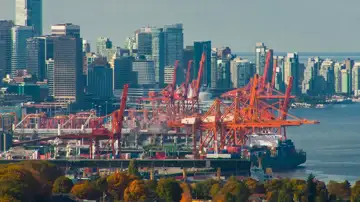
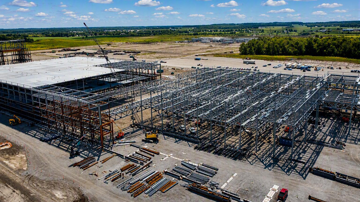
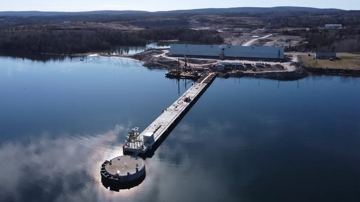
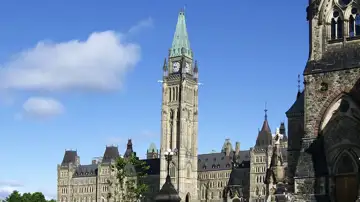
The Canadian government's initiative to expedite nation-building projects is encountering significant opposition from the scientific sector, particularly among ecologists and biologists. Experts have raised alarms that proposed reforms could potentially dilute environmental safeguards, increase risks to endangered species, and impose serious economic burdens on Canadians. The Canadian Society for Ecology and Evolution (CSEE), which represents about 930 scientists nationwide, is at the forefront of this dissent, asserting that exempting large projects from the scrutiny mandated by the Impact Assessment Act would diminish the capacity to identify environmental hazards before construction commences and eliminate chances to alter projects to mitigate harm.This backlash is a response to a discussion paper released by the government titled 'Getting Major Projects Built in Canada.' This document is part of Prime Minister Mark Carney's initiative to hasten approval processes for significant infrastructure ventures, including pipelines and transmission lines. The government contends that the existing regulatory framework is often redundant, resulting in approval delays that can extend beyond five years, which they argue dissuades investment and stifles economic expansion.
However, the CSEE has submitted a response to the Privy Council Office, expressing support for efforts aimed at reducing bureaucratic inefficiencies but firmly opposing any reforms that would erode environmental assessment standards. The submission has received backing from other significant bodies, including the Canadian Society of Zoologists and the Society of Canadian Ornithologists.
Central to the contention is a proposal that may permit certain major projects to completely bypass federal impact assessments. The government’s discussion paper considers the establishment of new federal economic zones and the expansion of the Canada Energy Regulator's role in evaluating specific projects, including pipelines, transmission lines, and offshore renewable energy initiatives. According to the CSEE, these projects often traverse ecologically sensitive regions and can disrupt wildlife habitats across provincial borders. Without thorough assessments, the scientists warn of heightened risks of water pollution, habitat destruction, declines in species populations, and the loss of essential natural ecosystems that underpin local communities and economies.
Julia Baum, president of the CSEE, articulated a grave concern in the submission, stating, "The obvious risk of these changes is that projects would proceed without first determining their potential health and environmental consequences – from diminished air quality and water contamination to species declines, extinctions, and the overall loss of natural capital – leaving communities and the natural resources (water, lands, and wildlife) supporting them to pay the price." Baum further emphasized that bypassing environmental assessments would inhibit the possibility of modifying projects, even slightly, to lessen their adverse environmental impacts.
Another critical issue raised by the CSEE involves proposed amendments to the Species at Risk Act. The government is contemplating allowing the cabinet to exempt certain projects from the law’s “jeopardy test,” which currently mandates that approved activities must not jeopardize the survival or recovery of endangered species. The CSEE argues that this safeguard is one of the few legally binding protections available for wildlife in Canada and cautions that creating exemptions could expose conservation decisions to political and economic pressures.
Moreover, scientists have expressed apprehension regarding plans to expand habitat offsetting under the Fisheries Act, as this would facilitate developers in compensating for damaged fish habitats by restoring or creating alternative habitats. However, research indicates that newly established ecosystems rarely match the biological value of natural habitats that evolve over extensive periods.
The CSEE frames its opposition in economic terms as well, highlighting that Canada’s natural capital—including forests, wetlands, freshwater systems, oceans, and grasslands—offers substantial economic advantages through water purification, carbon sequestration, flood mitigation, fisheries, and tourism. The organization’s submission points out that the ecosystem services derived from Canada’s boreal region alone are valued at no less than $93 billion annually, starkly contrasting with an approximate $38 billion in net market value generated through resource extraction.
Additionally, the society cites a separate study indicating that protected and conserved areas contribute $10.9 billion to the GDP and support 150,000 jobs each year. The CSEE warns that weakening environmental laws could lead to legal and trade complications, particularly given Canada’s obligations under the Canada-European Union Comprehensive Economic and Trade Agreement, which includes commitments to uphold environmental laws and not relax them to attract trade or investment.
The society further argues that the proposed reforms could conflict with Canada’s commitments to the Kunming-Montreal Global Biodiversity Framework and complicate efforts to adhere to Indigenous consultation and consent requirements under the UN Declaration on the Rights of Indigenous Peoples.
Despite its criticisms, the CSEE is not advocating for a halt to major projects. Instead, it is calling on the government to seek what it describes as “win-win” solutions that harmonize economic development with environmental stewardship. The group proposes strategic land-use planning, enhanced investment in scientific expertise at the Impact Assessment Agency of Canada, regional environmental assessments prior to project approvals, stronger collaboration with scientific experts, and continued protection of critical habitats under species-at-risk legislation. The CSEE also suggests prioritizing approvals for projects that align with Canada’s climate commitments while ensuring robust safeguards for wildlife and ecosystems.
The federal government has indicated that it will consider feedback from industry stakeholders, Indigenous communities, environmental organizations, and the public before finalizing any legislation. A report detailing the findings is anticipated by the end of summer.
🏷️
species at risk
land-use planning
biodiversity
infrastructure projects
economic growth
impact assessment act
natural capital
Canada
ecological impact
environmental assessment
← Previous Post
Balancing Carbon Emissions and Housing Affordability in Canada's Building Codes2 months ago
Next Article →
Innovative Bridge Replacement in Coquihalla Canyon Park After 2021 Flooding2 months ago