Winnipeg's Summer Construction Season Kicks Off with Major Infrastructure Projects
📅 3 months ago
As summer arrives in Winnipeg, construction crews are busy renewing the city’s roads, bridges, and active transportation infrastructure. The city’s short construction season is highlighted by significant projects including the Lagimodiere Twin Overpass Rehabilitation and Pembina Highway overpass improvements, with a combined budget of over $40 million.
In Winnipeg, the arrival of summer signals a crucial period for the enhancement of roads, bridges, and active transportation infrastructure. The city experiences long winters, resulting in a limited construction season that typically spans from mid-May to October, totaling only five-and-a-half months. The City of Winnipeg has outlined four primary types of renewal work for its infrastructure: reconstructions, rehabilitations, pavement preservation, and right-of-way improvements.For the summer of 2026, city crews are actively engaged in constructing or overhauling approximately 175 lane kilometers of roads, enhancing 50 sidewalk locations, and adding 15 kilometers of bike lanes and active transportation pathways. The budget allocated for local and regional street improvements stands at around $156.8 million. Most of the projects slated for this season have already been tendered, with many either underway or set to commence shortly.
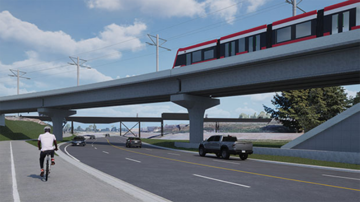
One significant undertaking is the Lagimodiere Twin Overpass Rehabilitation and Roadworks project, which encompasses the renewal of Lagimodiere Boulevard. This major north-south arterial road, located on the eastern side of the Red River, forms part of Manitoba Highway 59. The project focuses on rehabilitating the overpass bridges where Lagimodiere Boulevard intersects with Concordia Avenue and the Canadian Pacific Kansas City (CPKC) rail line. Roadwork at the junction of Lagimodiere and Grassie Boulevard kicked off in July 2026.
The dual objectives of this initiative are to repair the road and ramps, ensuring the bridges can endure for another 50 years. Additionally, the project includes the installation of new multi-use paths along Concordia Avenue, aimed at enhancing the area’s walking and biking network. Construction is anticipated to span 2026 and 2027, with phase one, involving work on the southbound bridge, expected to conclude by October 31, 2026. The second phase, focusing on the northbound structure, is scheduled for January to November 2027. PCL Constructors has been designated as the main contractor for this project.
In a related effort, the city is also undertaking the rehabilitation of the Pembina Highway overpass at Abinojii Mikanah, which was formerly known as Bishop Grandin Boulevard. This project will partially reconfigure the interchange and implement improvements aimed at enhancing safety and optimizing traffic flow. Pembina Highway, a major route through Winnipeg, connects suburbs such as North Kildonan, East Kildonan, Fort Rouge, Fort Garry, and St. Norbert with the downtown area.
The Pembina project includes the repair of the bridge, roads, and ramps; the relocation of the ramp connecting eastbound Abinojii Mikanah from Chancellor Drive to Pembina Highway; adjustments to transit stops; and enhancements to pedestrian and cycling infrastructure. All components of this project have been tendered, with MD Steele serving as the main contractor. Completion of the work is anticipated by October.
Ahmed Shalaby, a professor of civil engineering at the University of Manitoba and head of the department’s pavement research group, has noted that counting the number of roads repaired or potholes filled is not a perfect measure of whether the road network is genuinely improving or merely staving off further deterioration. He emphasizes the need for Winnipeg to diversify its transportation options, stating, “Winnipeg does not have as many transportation options as other Canadian cities of its size.”
Shalaby advocates for investments in transit improvements and active transportation, asserting that these initiatives could yield long-term savings for the city, provided they attract greater ridership—currently less than 10 percent—and offer connected routes for active transportation. Although Winnipeg boasts an extensive rail network, there are no current plans to utilize existing or abandoned rail lines for passenger transportation. Shalaby suggests that leveraging these rail lines for passenger rail service could be a transformative solution, although it would necessitate agreements with rail owners and federal legislation encouraging shared use during peak commuting times.
He concludes that the utilization of existing rail lines for passenger transport is a far more favorable outcome than relocating them outside the city and converting the land into green space.
🏷️
Construction
Pembina Highway
bridges
Lagimodiere Boulevard
Infrastructure
roads
active transportation
MD Steele
PCL Constructors
Winnipeg
← Previous Post
Vancouver Regional Construction Association Announces 2026 Silver Award Winners3 months ago
Next Article →
U.S. Army Corps Approves Controversial Line 5 Tunnel Project Despite Environmental Concerns3 months ago