Augmenta Unveils ACP 2.0: A Leap Forward for VDC Teams in Electrical Contracting
📅 4 months ago
🏷️ Augmenta
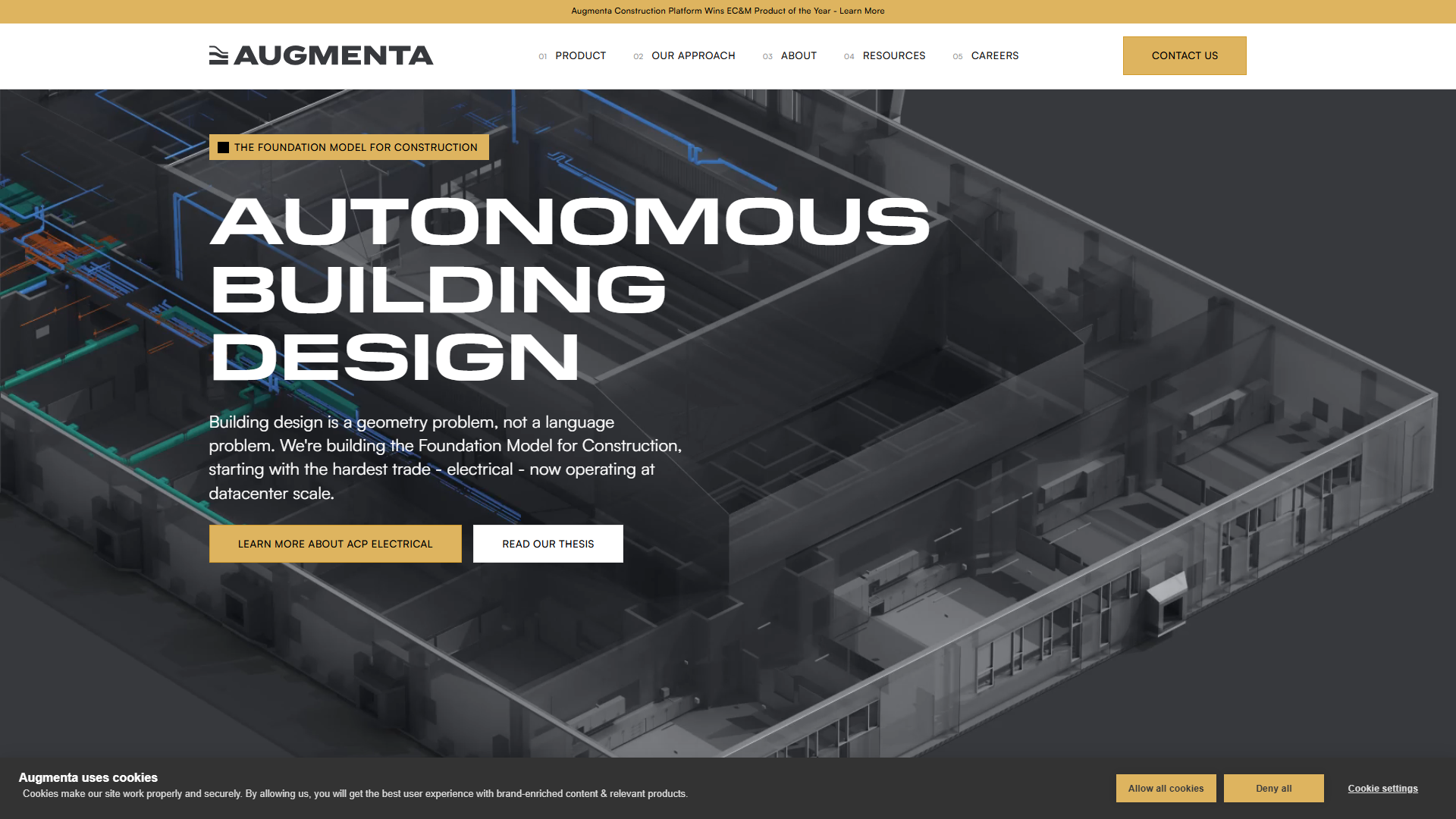
Augmenta's latest release, ACP 2.0, addresses critical challenges faced by electrical contractors by enhancing the BIM coordination process, allowing broader team participation, and facilitating quicker adjustments to design changes.
The recent discussions among contractors have shed light on the evolving needs of the construction industry, particularly regarding the Augmenta Construction Platform (ACP) 2.0. As contractors expressed their experiences, it became clear that while teams were able to utilize ACP to quickly generate a populated model, they often reverted back to traditional software like Revit and Navisworks to implement changes. This reversion often resulted in significant delays; for instance, a design change introduced just two weeks prior to a coordination meeting could set a team back by several days in terms of rebuilding their model. This feedback highlighted a critical gap in the platform’s capabilities, indicating that while rapid model generation is beneficial, contractors required a solution that would allow them to maintain their work within the model throughout the entire coordination process, enabling swift reactions to changes without losing progress.The initial feedback from users of ACP 2.0 has been overwhelmingly positive, providing strong validation for the platform’s enhancements. A Director of Virtual Design and Construction (VDC) noted that the latest release represented a significant leap forward in functionality. They recounted how their team had prepared their model using ACP just a week before a crucial meeting, which allowed them to enter with all necessary geometry already integrated. Another Director of Construction Technology expressed elation over the improvements, stating that her team was "wiping away tears of joy" following their experience with the new features.
A notable enhancement in ACP 2.0 is the improved underground routing capability, a request that emerged consistently from contractors across various project types. Previously, while some underground functions existed, the new version allows teams to specify routes point-to-point across a site, with precise control over pitch, slope, and the ability to navigate around existing site conditions such as footings and plumbing. This functionality reflects Augmenta’s commitment to addressing the specific needs of contractors and enhancing flexibility in their workflows.
The dynamics of BIM coordination are also shifting with the introduction of ACP 2.0. Traditionally, this area has been dominated by a select group of specialists who have mastered complex software like Revit. However, with ACP operating in a browser-based environment, it enables broader participation. Any team member familiar with tools like Bluebeam or capable of interpreting single line diagrams can now contribute to the model. This democratization of the BIM process is expected to lead to more constructible outputs and fewer surprises during the construction phase, as insights from foremen, project managers, and other knowledgeable personnel can now influence the design earlier in the process.
Augmenta's philosophy is encapsulated in its name, reflecting a commitment to complementing human expertise rather than replacing it. The platform's AI capabilities handle intricate geometry and routing logic, while human operators provide the project-specific knowledge and constructibility insights necessary for practical implementation. This approach is termed "automation you steer," emphasizing that users maintain control over decision-making, which is critical in ensuring the model's viability for construction.
Moreover, the enhancements offered by ACP 2.0 are not merely about improving efficiency; they are fundamentally about equipping electrical contractors with the capacity to take on additional projects. This principle is central to Augmenta's vision, as clients increasingly view ACP as a growth investment rather than just a tool for cost reduction. By alleviating the bottleneck of manual modeling, teams can manage more projects simultaneously, which ultimately contributes to business growth. Additionally, teams that can produce a coordination-ready model more swiftly arrive at meetings with increased leverage, thus enhancing their influence over critical routing decisions and reducing concessions to competing trades.
The operational impact of ACP 2.0 on VDC teams is profound. With significant time saved from manual modeling processes, teams can redirect their efforts into higher-value activities such as plan reviews, submittal preparations, and early detection of constructibility issues. The future role of VDC teams is expected to expand considerably over the next few years, with greater emphasis on upfront modeling to mitigate downstream risks, increased scope for prefabrication, and involvement in early estimation activities that typically lack sufficient time allocation.
Looking ahead, ACP 2.0 is a pivotal component of Augmenta's overarching strategy. It paves the way for a comprehensive environment where the entire design process—from initial layout decisions to full coordination—can occur in a single, accessible platform. Building on the foundation established by the first version released in 2025, V2 sets the stage for tighter integration with coordination workflows. The long-term ambition is to achieve full building design automation, creating a fully coordinated, costed, and construction-ready model across all trades. While the journey is ongoing, the advancements made with V2 bring Augmenta closer to realizing this vision.
🏷️
VDC teams
Construction Efficiency
construction technology
Augmenta
ACP 2.0
BIM Coordination
Design Process
Underground Routing
electrical contracting
automation
← Previous Post
Owen Electric's VDC Team Leverages AI for Enhanced Coordination in Large-Scale Projects4 months ago
Next Article →
Augmenta Unveils ACP 2.0, Transforming Electrical Design Processes for Contractors4 months ago