Completion of First Tunnel Marks Major Infrastructure Progress in Port Colborne
📅 2 months ago
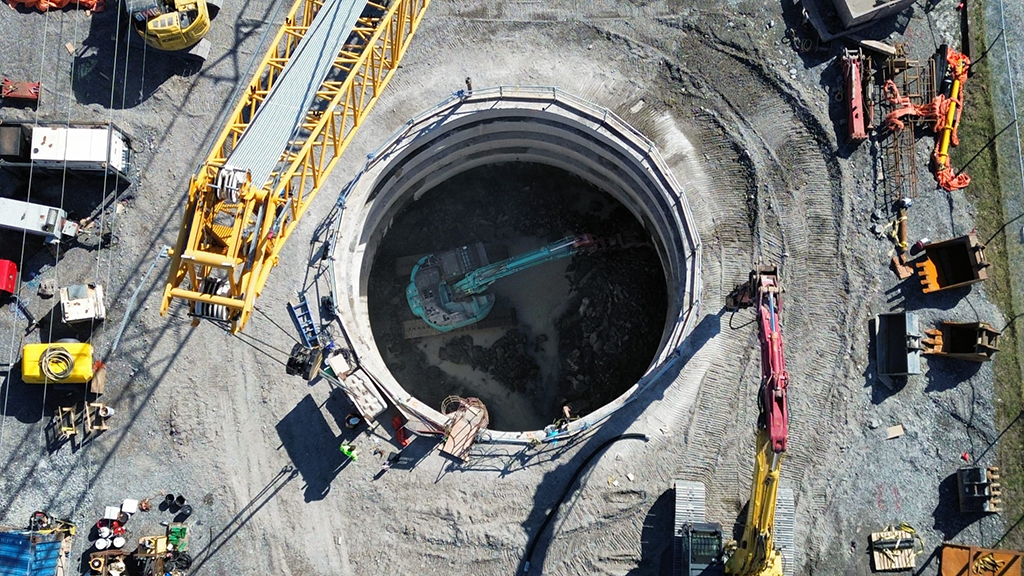
The installation of the first of two tunnels beneath the Welland Canal is a significant milestone for infrastructure development in Port Colborne, essential for the city's East Side Employment Lands and Asahi Kasei's manufacturing facility.
A significant milestone has been reached in Port Colborne, Ontario, with the successful installation of the first of two 1.5-meter-diameter, 310-meter-long concrete-encased servicing tunnels beneath the Welland Canal. This crucial tunneling operation, executed by Ward & Burke Microtunneling, was completed in just 33 days, marking an important step in the city's infrastructure development. The installation occurred on July 9, and the boring for the second tunnel commenced in mid-August, with completion expected by the end of September.The first tunnel will accommodate four forcemains with diameters ranging from 150 to 400 millimeters, while the second tunnel is designed to house a 500-millimeter-diameter forcemain and a watermain of the same size. This infrastructure project aims to connect essential services from the west to the east side of the canal, effectively supporting the East Side Employment Lands and the new $1.7 billion manufacturing facility being developed by Asahi Kasei, which will produce lithium-ion battery separators.
The project has been four years in the making, with its design phase commencing in 2024. Niagara Region is spearheading the initiative in collaboration with the City of Port Colborne. The general contractor for this endeavor is Rankin Construction, while Associated Engineering serves as the design consultant. GEI Consultants has been engaged as the environmental consultant, ensuring that all ecological considerations are addressed.
The installation of the tunnels began with the excavation of a 21-meter-deep shaft on the west side of the canal, alongside a 17-meter shaft on the east side. Following this, the next steps will include boring the tunnels, inserting the forcemains and the watermain, and subsequently grouting the tunnels. Phill Lambert, the Niagara Region’s director of water and wastewater services, outlined the complexities involved in this operation, particularly in managing the water table and the pressure on the microtunnel boring machine.
The tunneling process required precision, as the alignment followed a curved path rather than a straight line, necessitating a careful approach to maintain a minimum clearance of 6.5 meters beneath the canal bed. Continuous electronic position monitoring was crucial throughout the boring process, supplemented by controlled survey verification at intervals of approximately 60 meters to ensure accuracy in alignment and grade.
Once the tunnels are fully operational, the forcemains will connect with two new pumping stations being constructed on the east side of the canal, which will service both the employment lands and the Asahi Kasei facility. The sewage will be pumped to the Seaway Wastewater Treatment Plant located on the west side of the canal, with operations expected to commence by the third quarter of 2027.
Project manager Gord Bell expressed enthusiasm for the collaboration among the city, the contractor, and the St. Lawrence Seaway Management Corporation, whose approval was essential for traversing the canal. "This is and has been a wonderful project," Bell stated, highlighting the importance of teamwork in achieving this infrastructural feat.
🏷️
tunneling
Rankin Construction
Niagara Region
microtunneling
forcemain
Port Colborne
Asahi Kasei
Welland Canal
Infrastructure
watermain
Next Article →
Halton Healthcare Initiates Major Expansion to Increase Hospital Capacity2 months ago
Related Posts