
SICKKID'S HOSPITAL
📅 7 months ago
🏷️ Priestly Demolition
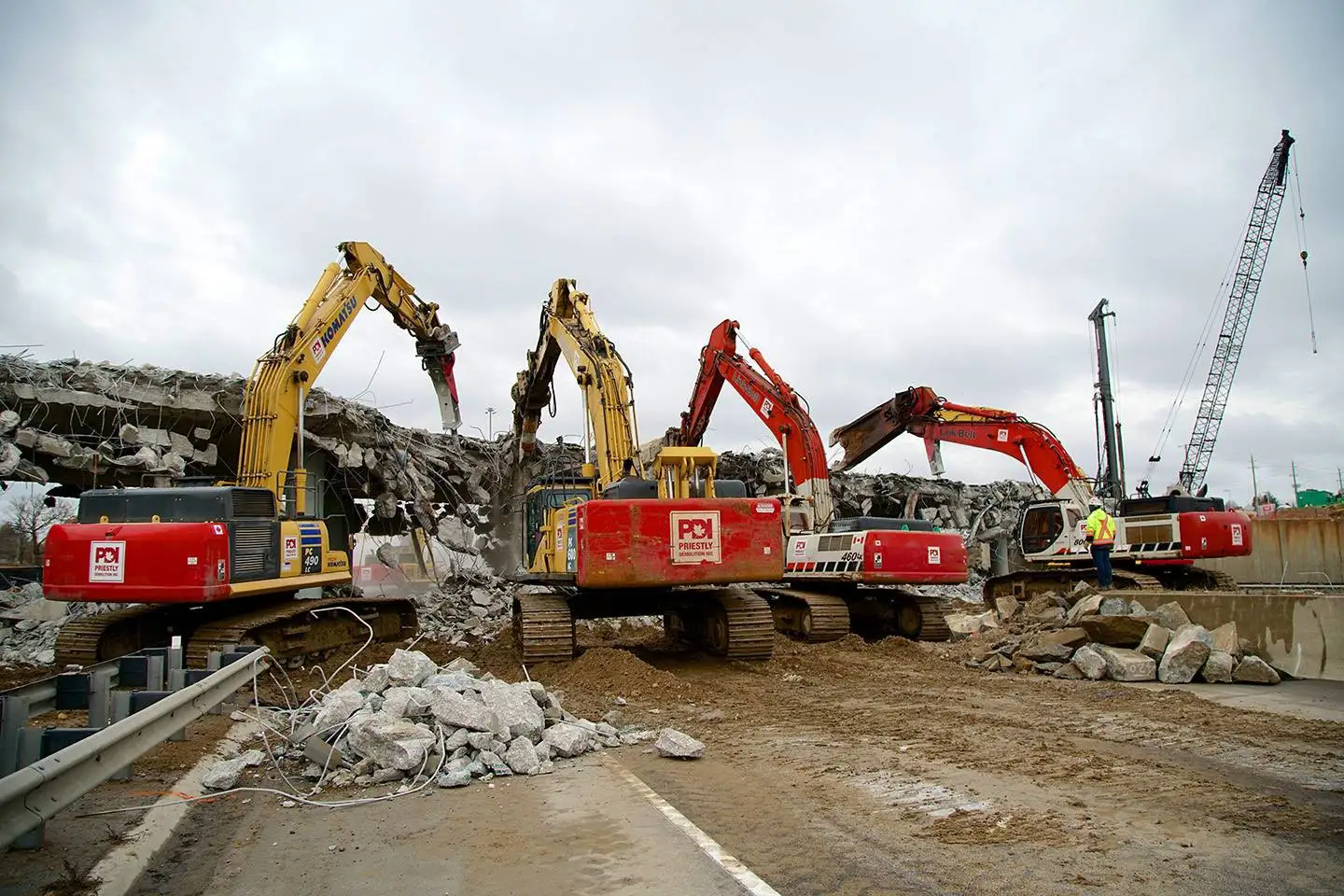
Part 1 – News Summary
A recent demolition project saw the complete removal of the eight-storey Elizabeth McMaster Building, situated on Elizabeth Street between Walton and Elm Streets. The project involved a two-phase process, beginning with the careful elimination of hazardous materials such as asbestos and the extraction of the building’s internal systems, including mechanical, electrical, plumbing elements, drywall partitions, and flooring. Once the interior was cleared, demolition crews shifted focus to dismantling the structure’s supporting elements — removing the concrete slab, columns, foundation walls, and footings. Due to the building’s proximity to neighboring large structures, specialized techniques were employed. Crews installed shoring within the building to facilitate the use of cranes for roof access, enabling a top‐down demolition sequence. A suspended debris screen was also deployed to mitigate the risk of falling material impacting nearby traffic. This project, reported by Priestly Demolition, underscores the operational rigor required in urban demolition where safety and precision are paramount.
Part 2 – Industry Context
In Canada’s urban construction sector, projects that involve the removal of older or hazardous structures demand advanced planning and strict safety measures. This project exemplifies the evolving focus on asbestos abatement, engineered shoring, and debris control in dense settings. As developers and municipal authorities prioritize safety and environmental considerations, such demolition efforts also pave the way for redevelopments that align with contemporary building standards and regulatory requirements. The methodologies applied here reflect broader trends toward minimizing disruption while ensuring worker and public safety in urban demolition operations.
Related Posts