BGC Engineering Honored with ACEC-BC Award for Pioneering Climate Risk Assessment
📅 4 months ago
BGC Engineering has received the ACEC-BC Award of Excellence for its groundbreaking project assessing disaster and climate risks across British Columbia, providing crucial geospatial data to enhance community resilience.
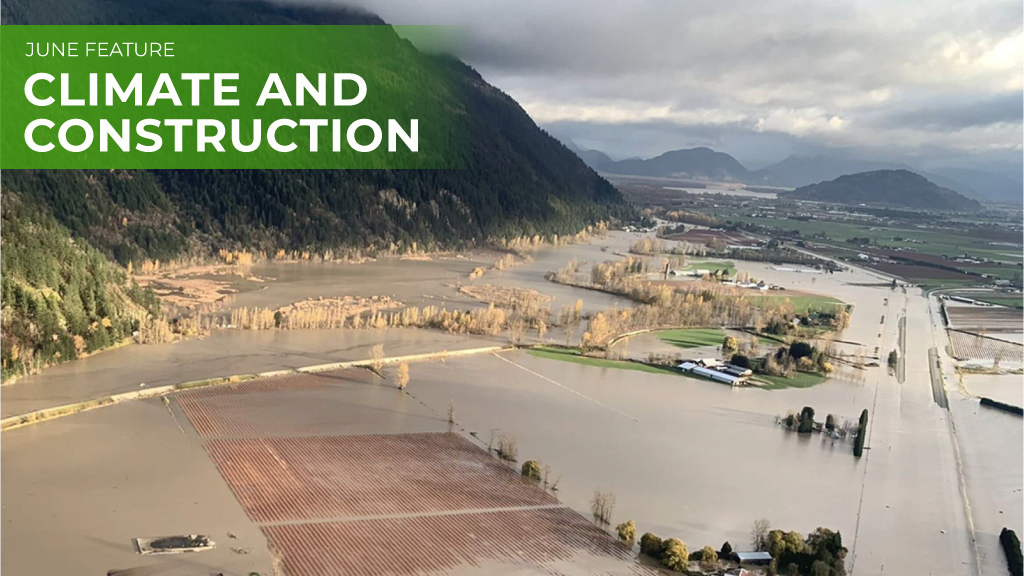
BGC Engineering, based in Vancouver, has been awarded the 2026 Association of Consulting Engineering Companies British Columbia (ACEC-BC) Award of Excellence in the Soft Engineering category. This recognition is for their project titled Geospatial Analysis – Provincial Disaster and Climate Risk and Resilience Assessment (DCRRA), which was conducted in collaboration with the B.C. government. The initiative represents the most comprehensive province-wide assessment of disaster and climate risks, offering vital geospatial data that maps natural hazards such as wildfires and floods, evaluates the impact of climate change on these hazards, and examines the exposure of communities, people, and critical infrastructure across nearly one million square kilometers of British Columbia. "We’re very happy to have won the award," stated Kris Holm, BGC’s principal geoscientist and communities team lead. "The work that BGC does with communities is very meaningful to us, because it addresses fundamental needs." British Columbia is recognized as one of Canada’s hotspots for natural disasters, exacerbated by climate change. The province faced significant wildfires in the years 2021, 2022, and 2023. Additionally, a severe atmospheric river event in late 2021 led to two days of intense rainfall, resulting in floods and landslides that claimed at least five lives and disrupted road and rail connections between Vancouver and the rest of Canada. With the increasing likelihood of climate-related emergencies, the province required an accurate assessment of its vulnerabilities. According to the Ministry of Emergency Management and Climate Readiness, the government understands that preparation and risk mitigation are essential in light of escalating climate emergencies. "That’s why we are making more risk information available to communities and emergency practitioners," the ministry declared in a statement. "The last hazard assessment in the province was conducted in 1997, making updated risk data long overdue. The outcomes of the DCRRA will assist in prioritizing actions that enhance B.C.’s resilience and inform strategic investments." To tackle this complex challenge, a large consulting group was formed, led by prime consultant Sage on Earth Inc. from North Vancouver. BGC’s team consisted of experts in geo-hazards, data science, risk analysis, and geographic information systems. "We provided the information and the data," Holm explained. "Where are the natural hazards and what are the assets we value?" BGC compiled and analyzed data for six distinct types of natural hazards: earthquakes, drought, extreme heat, river flooding, coastal flooding, and wildfires. The analysis focused on the risks posed to human populations and both private and public properties. BGC identified the hazards affecting cities, towns, villages, and other settlements housing approximately five million residents, alongside $900 billion worth of buildings and over one million kilometers of transportation, energy, water, petroleum, and communication infrastructures. The team assessed the severity of hazards based on exceedance probabilities and intensity thresholds, integrating considerations for climate change impacts on extreme heat and drought. The BGC team utilized diverse population and asset data, developing software that allowed for the intersection of hazard data, ultimately summarizing results in 1 km by 1 km vector grids. This comprehensive assessment pinpointed hazard exposure hotspots and individual hazard-asset intersections for future evaluation. Overall, the DCRRA produced the most extensive province-wide overview of disaster and climate risk ever compiled in British Columbia. The geospatial assessment provided foundational data regarding the exposure of individuals and critical infrastructure to hazards, establishing a repeatable framework for future updates. The findings support compliance with the new Emergency Act requirements and are instrumental in disaster risk reduction and climate adaptation planning across B.C. Holm noted that conducting risk assessments on such a vast scale – nearly one million square kilometers – presents significant challenges. "Our knowledge of the hazards is very incomplete, and every risk assessment is merely a snapshot in time, necessitating regular updates," he remarked. He emphasized the collective responsibility of managing climate change risks: "We need to recognize that we’re all in this together. B.C. faces many different natural threats, and everyone shares responsibility for managing the risks from climate change." The entirety of the project, including BGC’s geospatial analysis, was developed in collaboration with First Nations, incorporating Indigenous and local knowledge, and aligning with the modernized Emergency and Disaster Management Act and the Climate Change Accountability Act. The DCRRA results serve as a foundational starting point for understanding and mitigating natural disaster risks in B.C., facilitating risk management at regional and local levels in the future. BGC received its award during the 2026 ACEC-BC Awards for Excellence Gala, held on May 8 at the Vancouver Playhouse. The ACEC-BC Awards have been recognizing outstanding engineering projects since their inception in 1989.
🏷️
wildfires
emergency management
disaster resilience
Infrastructure
Indigenous knowledge
BGC Engineering
natural hazards
geospatial analysis
British Columbia
climate risk assessment
← Previous Post
Schneider Electric Canada Selected for Ontario Line South Electrical Solutions4 months ago
Next Article →
Fort McMurray Residents Take Matters into Their Own Hands Amid Pothole Crisis4 months ago