Canadian Aluminum Industry Shows Resilience Amid U.S. Tariffs
📅 5 months ago
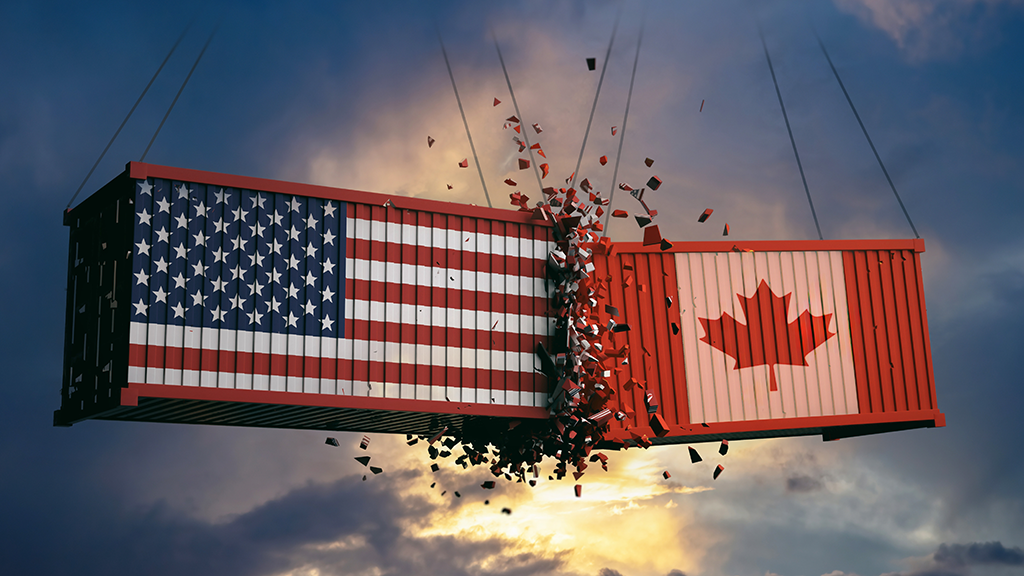
Despite the imposition of 50% U.S. tariffs on aluminum, the Canadian aluminum sector is operating at high capacity and adapting to market changes, according to the Aluminum Association of Canada.
MONTREAL — The Aluminum Association of Canada has reported that the effects of U.S. tariffs on aluminum have been less severe than initially anticipated. Jean Simard, the association's president and CEO, shared insights on the current state of the industry, revealing that it is functioning at an impressive 95 percent capacity. 'There has been no slowdown and no layoffs,' Simard remarked during an interview with The Canadian Press, reflecting on the impact of the 50 percent tariffs imposed by the U.S. on aluminum imports. 'It’s less painful than we expected.'Simard pointed out that the primary concern facing the industry is the uncertainty regarding future market conditions. 'We’re in a world of total uncertainty,' he stated. The Aluminum Association of Canada represents several major players in the industry, including Alcoa, Alouette, and Rio Tinto, and is closely monitoring the ongoing discussions aimed at renewing the continent’s free-trade agreement.
The significant tariff change occurred on June 4, 2025, when the Trump administration escalated tariffs on aluminum and steel imports from 25 percent to 50 percent. Initially, Canadian producers felt the brunt of this increase, with U.S. customers hesitant to absorb the price hikes. 'In Canada, we lost a lot of money. We lost nearly US$600 million over the next seven to eight weeks because we had to keep delivering metal that had been contracted, but the market wouldn’t pay the full price,' Simard noted. However, he emphasized that the situation has since improved.
As the price of aluminum has continued to rise, Simard predicts that the trend may persist through August, driven in part by production disruptions in Iran. Aluminum smelters in the Middle East have been forced to halt operations, and shipments bound for Europe and the United States are currently stalled in the Strait of Hormuz. 'The market is tightening. We’re moving from a price shock to a supply shock because there will be a shortage of metal,' he explained, adding that this shortage may vary across different market segments.
The ongoing crisis in Iran is expected to play a significant role in future discussions with U.S. officials regarding Canadian aluminum. Simard emphasized the strategic importance of Canada as a reliable aluminum supplier, stating, 'The one and only secure source of aluminum supply remains Canada.' He highlighted the logistical advantages of Canadian aluminum, which can reach U.S. markets in just three to five days, compared to 60 days from the Middle East or 60 to 70 days from India.
In light of the current market conditions, local mills are adapting by redirecting inventory that was initially intended for Europe to the U.S. market. 'We’re not losing money by doing this. On the contrary, we’re making money right now because the price is very high,' Simard confirmed. He noted that the price of aluminum in the U.S. now exceeds that in Europe by US$2,000 per tonne.
The White House's implementation of sector-specific tariffs on steel and aluminum aims to bolster American industries within these sectors. However, the Aluminum Association of Canada argues that despite these tariffs, there has been only a slight increase in primary aluminum production in the U.S., while consumption has dropped significantly compared to pre-tariff expectations. 'There is no increase in capacity. (The U.S.) announced a 50,000-ton project,' Simard stated, contrasting this with Canada’s production capabilities, which can yield 50,000 tons in just a week.
A report released by Quebec’s statistical institute and an industry association for the metal manufacturing and processing sector detailed the impacts of the trade conflict on aluminum, copper, and steel. The report indicated a 36 percent decline in Quebec’s metallurgical export volumes from February 2025 to February 2026, alongside a 3.6 percent drop in employment across the industry in 2025, predominantly within smelting operations. Notably, the aluminum sector experienced a five percent increase in employment, countering the overall trend in the industry.
🏷️
construction materials
aluminum
market dynamics
trade relations
Canada
Quebec
tariffs
employment
manufacturing
U.S.
← Previous Post
Middle East Conflict Adds Uncertainty to Canadian Construction Costs, Says Turner & Townsend Economist5 months ago
Next Article →
Team Ontario Shines at Skills Canada National Competition with 38 Medals5 months ago
Related Posts