Report Highlights Cost-Effectiveness and Environmental Benefits of Conservation-Focused Retrofits
📅 4 months ago
A recent report reveals that conservation-focused retrofits in Halifax, Montreal, and Vancouver can be more cost-effective and environmentally friendly compared to new construction, challenging existing industry norms.
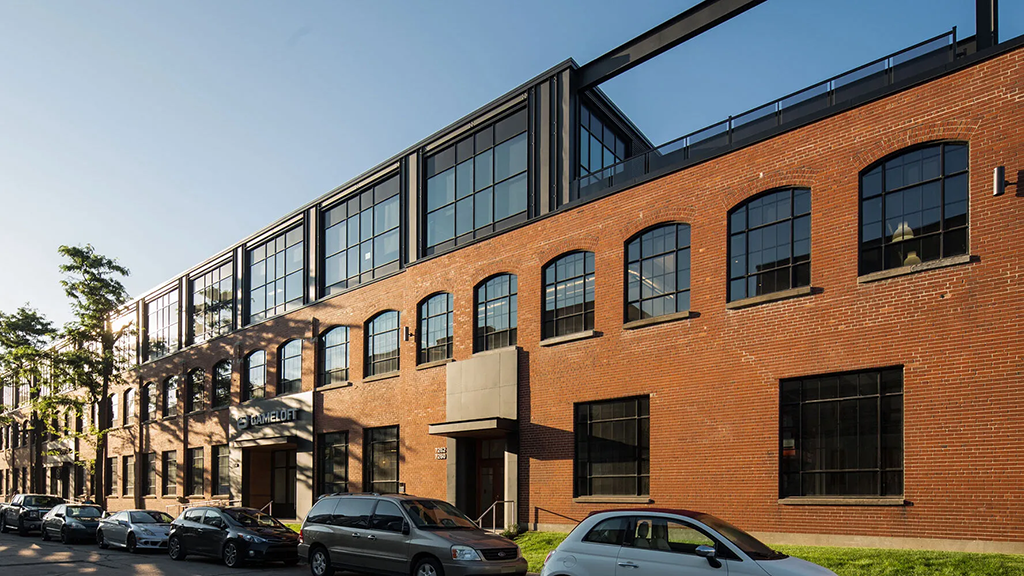
A newly released report examining three conservation-oriented building retrofits in Halifax, Montreal, and Vancouver has revealed a surprising conclusion for the construction industry: these adaptive reuse projects can often be more cost-effective than new construction while also producing lower embodied carbon. This finding, while anticipated by the report's organizers at the Canadian Association of Heritage Professionals (CAHP), has nonetheless shed light on the significant extent to which these buildings outperformed traditional demolition and new construction alternatives. Adam Hatch, president of the CAHP board of directors, expressed that the data collected through a comprehensive live carbon lens and life cycle costing was particularly valuable.The report focused on three specific buildings: a mid-century modern office building in Halifax, a former textile factory in Montreal, and a historic home in Vancouver. Although none of these structures were designated as historic, they were recognized for their intrinsic value within their respective communities. Rather than employing a deep-retrofit gutting strategy, the case studies conducted by CAHP embraced a conservation-led approach, which prioritized the reuse of existing materials and structures to minimize intervention.
Hatch noted that the advancement of conservation retrofits is hindered by the rigidity of current building codes, which do not effectively outline how builders can meet performance standards in these projects. As a result, developers and contractors, who tend to prioritize risk avoidance, often view retrofits as uncertain ventures, leading them to favor demolition as a more controllable option. He emphasized that flexible compliance pathways in building codes would provide builders with various options for managing unforeseen challenges in retrofits, effectively reducing project risks.
Another significant barrier to the adoption of conservation-focused retrofits is the prevailing industry mindset that views older buildings as having limited value. Hatch argued that these structures possess immense potential and that the industry must begin to recognize them as opportunities rather than burdens. In the specific case of the mid-century government office-to-residential conversion in Halifax, three scenarios were assessed: a full-scale retrofit, a retrofit with an addition, and a demolition followed by the construction of a new residential tower. The findings revealed that the retrofit not only resulted in “dramatically lower embodied carbon” than new construction due to the retention of the concrete structure, foundations, and envelope elements but also proved to be less expensive than the demolition and new construction alternative.
Similar results were observed in the retrofit of the early 20th-century textile factory in Montreal, reinforcing the trend that all three projects analyzed were more economical than their demolition and new construction counterparts. Additionally, Hatch highlighted that retrofits can be completed more quickly, citing the Halifax example where the retrofit is already renting units, while a nearby government building slated for demolition and replacement remains a vacant hole in the ground.
Conservation-led adaptive reuse can also streamline the permitting process, as the existing form, scale, and massing of the buildings are already established. The response from various levels of government to CAHP’s report has been encouraging, with many municipalities expressing interest in how to best apply building codes for retrofits to leverage the value of existing building stock. Moving forward, CAHP plans to share the findings of its report with policymakers regarding code standards and engage with government agencies, private owners, architects, designers, engineers, and homeowners.
Hatch emphasized the importance of educating builders and their workers on the potential for reusing materials and structures, stating that this knowledge will significantly aid in achieving environmental targets by minimizing unnecessary carbon expenditure. He noted that large firms are beginning to pivot away from new construction and towards renovations, predicting that in five years, this trend will continue, necessitating a widespread understanding of renovation practices. With approximately 75% of existing buildings expected to still be standing by 2050, Hatch reiterated the critical need for improving and repurposing these structures, not only to meet climate objectives but also from a practical standpoint, as they will continue to be part of the urban landscape.
🏷️
construction costs
building codes
adaptive reuse
building retrofits
embodied carbon
conservation
heritage professionals
renovation
urban development
sustainability
← Previous Post
Canada's Merchandise Trade Surplus Expands to $2.7 Billion in April Amid Rising Oil Exports4 months ago
Related Posts