Dallas Downtown Faces Vacancy Challenges Amid New Developments
📅 4 months ago
Dallas's downtown core struggles with high commercial vacancy rates while new developments emerge nearby, raising questions about the future of older office buildings.
The downtown area of Dallas is grappling with significant challenges as commercial office vacancies continue to rise. Many towers, originally constructed during a building boom four decades ago, stand largely vacant, with overall vacancy rates nearing 30 percent. Ray Washburne, vice-chairman of the Gillon Property Group, characterized these underutilized structures as 'zombie buildings,' primarily owned by lenders. A major contributing factor to this trend is the insufficient parking in the downtown area, which has driven companies away as workers prefer to commute to jobs located in the suburbs, where driving is more feasible. Despite efforts to enhance public transit and improve walkability in the downtown core, the perceived lack of safety remains a concern, even with an expanded police presence in the area.Recent efforts to rejuvenate the downtown environment have included discussions on making the area more pedestrian-friendly and appealing for families and local businesses. While the downtown population has seen growth and the addition of 20 acres of public parks, significant obstacles remain. The office buildings erected in the 1980s are often not suitable for conversion to other uses due to structural limitations or are deemed financially unviable for repurposing.
Nonetheless, indicators suggest that commercial activity in the Dallas-Fort Worth area is thriving, even as the central business district faces occupancy challenges. The region recorded the second-highest population growth in the United States in 2025 and ranked first nationally for corporate relocations from 2020 to 2025. Additionally, Dallas has been recognized for its robust new-home activity, according to a recent survey by ConsumerAffairs.
According to Jones Lang LaSalle's latest quarterly report, the Dallas office market began 2026 on a promising note, benefiting from the momentum of a strong close in 2025. The report highlighted that several large companies moving into the area contributed to over 300,000 square feet of positive net absorption, with leasing activities remaining consistent despite emerging macroeconomic challenges.
While the downtown core faces significant hurdles, new developments in adjacent areas are generating excitement. Notably, the Urban Towers project, encompassing 850,000 square feet with its four striking glass towers, is situated 12 miles north of downtown and has achieved LEED Gold certification. Nearby, the Pinnacle Tower, a 24-storey commercial building, has recently undergone a $9 million renovation and is now over 85 percent leased.
A major potential driver of business growth in the Dallas-Fort Worth region is the upcoming Texas Stock Exchange (TXSE), a fully integrated electronic securities exchange set to commence trading next month. The TXSE will be headquartered in the new Bank of America Tower at Parkside, a 30-floor LEED Gold-certified structure designed by Kohn Pedersen Fox, expected to be completed by 2027. This building will also serve as the regional headquarters for the Bank of America, which plans to occupy half of its 500,000 square feet of leasable space.
The Bank of America Tower is strategically located within a vibrant neighborhood rich in pedestrian amenities and adjacent to the five-acre Klyde Warren Park, described as an urban oasis. However, the ongoing allure of corporate campuses in outlying areas raises questions about the fate of older commercial buildings in downtown Dallas. Ross Perot Jr., a prominent real estate developer and board chair at the U.S. Chamber of Commerce, emphasizes the need for a focused redevelopment zone of approximately six or seven blocks. He advocates for incentives to encourage developers to either renovate outdated structures or replace them with new developments.
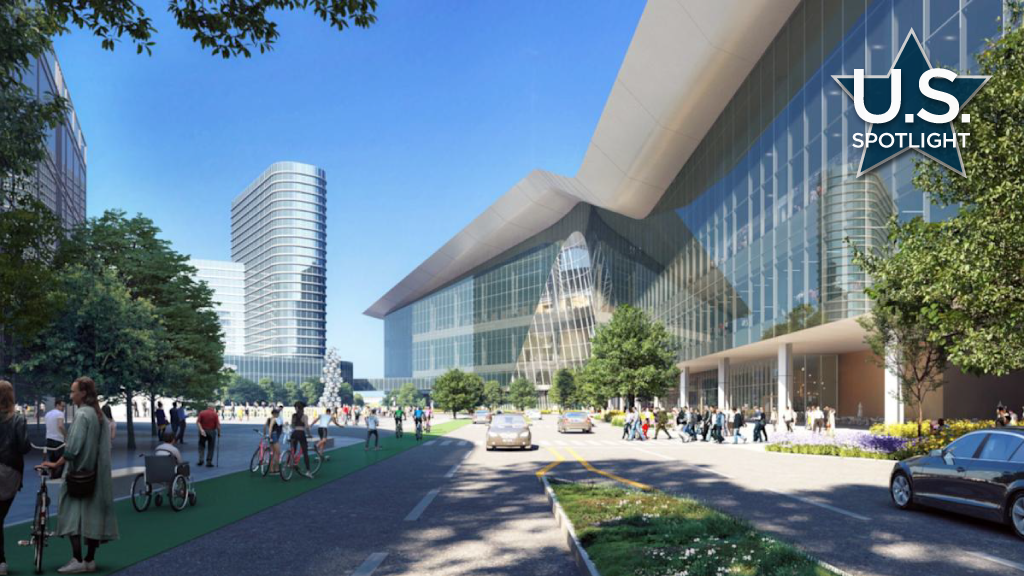
The fate of the Dallas City Hall and its surrounding 4.7-acre plaza remains uncertain but could play a crucial role in revitalizing downtown. Additionally, the $3.5 billion redevelopment of the Kay Bailey Hutchison Convention Center, expected to be completed by late 2029, may serve as a catalyst for transformation. Nonetheless, caution prevails as economist Cullum Clark from the George W. Bush Institute-SMU Economic Growth Initiative expresses concerns that the convention center could become isolated from the rest of downtown, surrounded by empty streets. He warns that without continuous attractions drawing residents to the area, the space risks becoming uninviting and underutilized.
🏷️
Bank of America Tower
Kay Bailey Hutchison Convention Center
office buildings
commercial real estate
Pinnacle Tower
Dallas
vacancy rates
Texas Stock Exchange
Urban Towers
urban development