Hamilton Moves Forward with Proposed Moratorium on Data Centres Amid AI Infrastructure Concerns
📅 4 months ago

Hamilton's planning committee has voted to advance a proposed moratorium on new data centres, responding to community concerns over environmental impacts and energy demands associated with the burgeoning artificial intelligence sector.
HAMILTON, ONT. — In a significant development in the ongoing debate surrounding artificial intelligence infrastructure in Canada, Hamilton's planning committee took a decisive step on Tuesday by voting to forward a proposed moratorium on new power-intensive data centres to the city council for future consideration. The motion, introduced by Coun. Nrinder Nann, seeks to provide the city with an opportunity to assess the environmental and infrastructural impacts of data centres and to establish a regulatory framework for their future development.During the committee meeting, a substantial number of residents voiced their support for the moratorium, emphasizing the need for community involvement in decisions that could significantly alter the local landscape. Nick Tsergas, a health journalist from Hamilton, articulated the concerns of many residents, questioning the role of local representatives in making such impactful decisions. He remarked, "When decisions of this magnitude are to be made — decisions that disrupt electric grids, pollute the water and air, that reshape neighbourhoods — what role should the people that live there and the people chosen to represent them have?" He further warned that the outcome of this decision could serve as a blueprint for other cities across Canada, for better or worse.
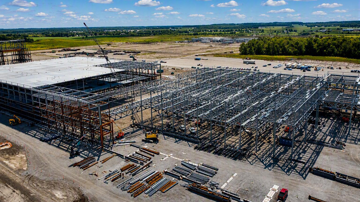
Hamilton has emerged as a focal point in the national discussion regarding the expansion of AI-related infrastructure. A controversial proposal for a large data centre campus on the city's harbourfront — an area historically influenced by the steel industry — has faced intense opposition from local residents. The proposal, backed by the private investment firm Slate Asset Management, aims to transform approximately three square kilometres of the harbourfront into a digital and industrial hub named Steelport. However, a city committee recently rejected a part of this plan that involved developing a data centre, following widespread public outcry.
Concerns raised by residents included the potential strain on the electricity grid, the risk of increased utility costs, and the negative environmental impact, including noise, water pollution, and heat emissions from data centres. Some community members expressed particular unease about AI technologies that could jeopardize jobs and exploit the work of artists without consent. Anne Pasek, a researcher from Trent University, highlighted the groundbreaking nature of the proposed moratorium, suggesting that it could position Hamilton as the first Canadian city to implement such a pause while developing a regulatory framework for data centre operations. She noted that this framework could enforce stricter standards for noise and water pollution while managing energy consumption effectively.
Although the committee's motion does not specify a timeline for the moratorium or set size exemptions for data centres, it has garnered overwhelming support from the public, with over 200 written submissions backing the initiative. In contrast, Slate Asset Management has urged the city to act quickly to seize what it describes as a generational opportunity. The firm argues that the Steelport hub could leverage the site's existing energy infrastructure and its proximity to major population centers would facilitate low-latency service delivery to potential clients, including universities and financial institutions.
A federally funded non-profit organization supporting the computational needs of university researchers has also indicated interest in collaborating on the proposed data centre campus. Slate's written submission cautioned that Hamilton risks missing out on a strategic opportunity to lead in the Canadian data industry, emphasizing the importance of developing data centres in a manner that benefits the surrounding community.
The demand for data centres has surged in Canada, driven by the rapid growth of artificial intelligence technologies. These facilities, known as hyperscale data centres, require significant energy resources, comparable to that of a small city, to operate high-powered servers for complex AI models like ChatGPT and Claude. The expansion of such infrastructure has heightened interest in natural gas generation, particularly in Alberta, raising concerns among critics about potential setbacks in efforts to reduce greenhouse gas emissions.
The federal government, led by Prime Minister Mark Carney, has expressed support for the development of data centres, asserting that it could help ensure compliance with Canadian laws regarding data handling and reduce dependency on foreign technology companies. However, the motion passed by Hamilton councillors highlighted a lack of municipal representation in consultations regarding the federal AI strategy, alongside a failure to propose environmental safeguards.
Hamilton’s resistance to data centre development mirrors similar pushbacks observed in other regions. Recently, Manitoba Premier Wab Kinew rejected a massive data centre project southeast of Winnipeg, citing the overwhelming environmental impacts and energy consumption as outweighing any limited advantages. Notably, while no Canadian city has yet enacted a data centre moratorium, several U.S. cities, such as Seattle, have implemented similar pauses recently.
According to a study published by York University researchers in April, Canada currently hosts five hyperscale data centres with a minimum energy capacity of 50 MW, with dozens more in various stages of development, primarily in Alberta. The Independent Energy Systems Operator in Ontario reported a significant increase in requests for data centre connections, noting a surge to around 6,000 MW of energy-related requests as of last month — a 70% increase from two months prior. This figure represents the energy needs of approximately five to six million homes, highlighting the scale of interest in data centre development, although many projects remain in preliminary stages and subject to fluctuation as applications are processed.
🏷️
construction regulations
Hamilton
data centres
environmental impact
technology infrastructure
community engagement
public health
energy consumption
artificial intelligence
Urban planning
← Previous Post
Hydro One Files Leave-to-Construct Application for $430 Million Durham Kawartha Power Line4 months ago
Next Article →
Saskatchewan's Public Safety Agency Criticized for Wildfire Preparedness in New Report4 months ago