Rapid Growth in Office-to-Residential Conversions Amid High Vacancy Rates
📅 4 months ago

The trend of converting office spaces to residential units is accelerating in the U.S. and Canada, driven by high vacancy rates and supportive local policies, with Calgary leading the way in Canada.
The transition from office spaces to residential units is gaining momentum, particularly within the United States. A recent analysis indicates that more than 90 conversion projects are slated for completion by the end of 2027. This surge in conversions can largely be attributed to decisions made during the pandemic, as noted by Travis Barrington, co-founder and CEO of Propmodo, a media and research platform. According to Barrington, these conversion projects typically take three to five years from the announcement stage to when they are ready for occupancy, provided that conditions are favorable. Many of the properties expected to reach completion in 2027 were rezoned, financed, or acquired during 2023 and 2024. This trend emerges against a backdrop of historically high office vacancy rates, prompting developers to recognize the financial opportunities associated with commercial properties that have significantly depreciated in value.The scale of housing units generated from these conversions is noteworthy. For instance, the Neoma Building's transformation into 82 apartments and 10 emergency shelter units was finalized in 2022 at a cost of $30 million, with funding sources including $5.5 million from the City of Calgary and $16.6 million from the Canada Mortgage and Housing Corporation's Rapid Housing Initiative. A report from RentCafe published in March 2026 highlights that the number of office-to-apartment conversions in the U.S. reached 90,300 units at the beginning of 2026, reflecting a year-over-year increase of 28 percent and nearly quadrupling the figures from 2022. This trend indicates that office conversions now represent approximately 47 percent of all future adaptive reuse projects across the nation.
Office vacancy rates differ significantly among various U.S. cities, with higher conversion rates correlating to elevated vacancy levels. For example, in early 2025, the national office vacancy rate approached 20 percent, with physical occupancy in numerous buildings hovering around 50 to 55 percent. This disparity has resulted in millions of square feet being underutilized, paving the way for extensive residential conversions.
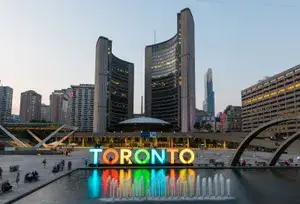
While high vacancy rates are also observed in Canadian cities, some markets are witnessing improvements. A report from CBRE released in April indicates a trend toward decreasing vacancies nationwide. The report states that net absorption has been positive for three consecutive quarters, primarily driven by Toronto. Overall, six out of eleven markets reported positive net absorption at the beginning of 2026. Additionally, the national sublease space has diminished for the 11th consecutive quarter, significantly dropping from its prior peak.
Despite these positive trends, concerns linger within the construction sector regarding the influx of new supply entering the market in the first quarter of 2026, alongside record low starts, which have led to total new construction figures falling to a 22-year low. However, the CBRE report identifies a bright spot for construction entities in the form of conversion opportunities, as over 1.5 million square feet of office space was removed from inventory for residential conversion in Q1 2026, marking a record high for any single quarter. Since 2021, CBRE has noted that conversions and demolitions have contributed to a 2.5 percent reduction in office inventory, potentially surpassing new supply in the coming year.
Despite the promising outlook for office-to-residential conversions, the actual number of projects in progress varies significantly across Canadian markets. Recent statistics from CMHC indicate that conversions from non-residential to residential uses in Calgary are expected to yield nearly 1,400 new units, a stark contrast to Toronto's pipeline, which is nearly 40 times smaller. One factor contributing to this disparity is Calgary's office vacancy rate of around 28 percent compared to Toronto's 17.6 percent.
In response to its high vacancy levels, Calgary has implemented supportive financing and zoning policies that set a commendable example for other cities. For instance, in February, Calgary announced the development of 128 new homes aimed at low and moderate-income groups through its inaugural Downtown Non-Market Office Conversion Grant. This initiative seeks to convert underutilized downtown office spaces into essential non-market housing. The total project costs of $55 million for these two developments are supplemented by $10.3 million in funding from the federal Housing Accelerator Fund.
Calgary's ongoing Downtown Development Incentive Program has already facilitated 21 office conversion projects, six of which have been completed, resulting in $805 million in private investment. This initiative has successfully created 490 new homes in the city center, including 170 affordable and below-market units. However, the conversion of office spaces into residential units requires thorough return on investment (ROI) analysis, and the process can span several years, often hindered by structural issues, high construction costs, financing challenges, and regulatory requirements at the local level. The Atmospheric Fund (TAF) has identified these obstacles as common barriers to conversion projects.
Despite these challenges, TAF emphasizes that various financing programs are available across Canada through government channels and other sources to support conversions, especially those targeting carbon reduction in the final result. TAF states, “The capital is ready, but we need policy certainty and market activation to really scale retrofits and reap the benefits as a society.” With the outlook for new commercial office projects appearing bleak, the exploration of office-to-residential conversions presents a significant opportunity for developers and the construction industry alike.
🏷️
Calgary
commercial vacancy
urban development
construction trends
office-to-residential conversions
housing units
financing programs
sustainable construction
adaptive reuse
Toronto
← Previous Post
Lower Mainland Real Estate Market Shows Continued Decline as Sales and Prices Drop4 months ago
Next Article →
Obama Presidential Center Nears Completion Amid Controversy Over Design and Impact4 months ago