Obama Presidential Center Nears Completion Amid Controversy Over Design and Impact
📅 4 months ago
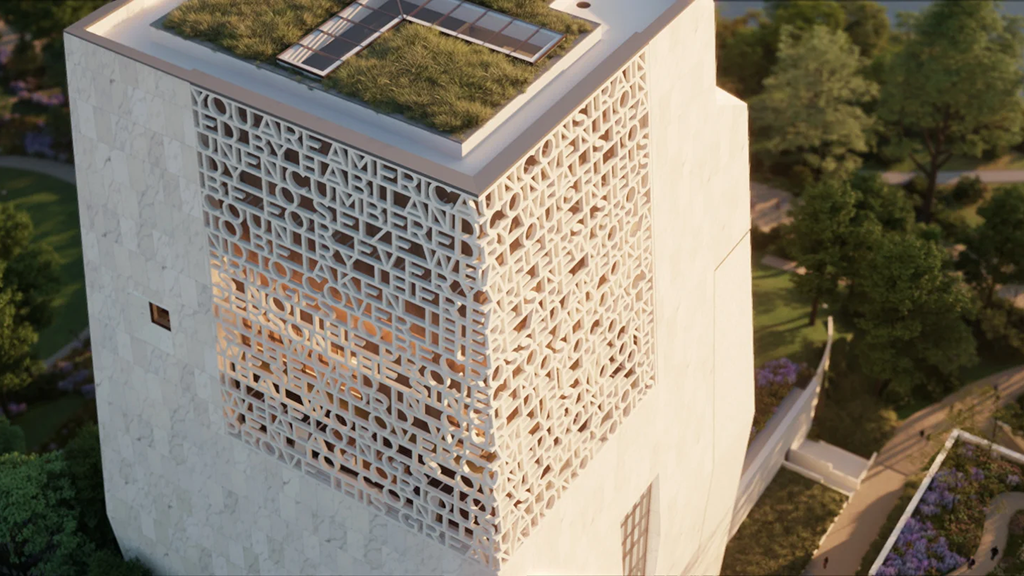
As the Obama Presidential Center approaches its public opening on Juneteenth, it faces mixed reactions from Chicago residents regarding its design and impact on the community.
In Chicago, a striking granite structure rises prominently over a verdant area in the South Side, its nearly windowless facade reminiscent of a futuristic movie set rather than the cutting-edge presidential museum it houses. The Obama Presidential Center, currently under construction at 6251 S Stony Island Ave, is set to open to the public on June 19, 2026, marking a significant milestone more than ten years after the original site was selected. With an estimated cost of $830 million, the project has sparked debate within the city known for its architectural significance, especially due to the 225-foot highrise that dominates its northern end.Opinions on the building's design are sharply divided among Chicagoans. Some residents, like Brenda Nelms, who has lived in the vicinity since the 1970s and advocates for the preservation of nearby Jackson Park, have expressed strong disapproval, likening the structure to a grain elevator or a spaceship from 'Star Wars.' Nelms lamented that the design does not harmonize with the classical architecture typical of the area. Conversely, supporters of the project believe the center will be a transformative addition to Chicago's skyline, creating a lasting legacy in Obama's hometown.
Valerie Jarrett, CEO of the Obama Foundation and a former advisor to President Obama, acknowledges the mixed responses but emphasizes the center's intent to be welcoming to all, regardless of their background. In a lighthearted promotional move, the foundation enlisted 'Star Wars' actor Mark Hamill to create engaging content, aligning with the building's futuristic appearance.
The architectural dialogue in Chicago is known for its intensity, with critics like Lee Bey from the Chicago Sun-Times calling the center's design ill-suited to the city's storied architectural backdrop. He noted that the museum's limited window design serves a purpose by protecting valuable artifacts from sunlight, although he believes its aesthetic contrasts with the predominantly low-rise structures on the campus, which also includes a playground, basketball court, and a public library.
Edward Keegan, a columnist for the Chicago Tribune, echoed similar sentiments, describing the museum as an unconventional building that provides unique views of the city from its glass-enclosed 'Sky Room.' This area offers a rare vantage point over downtown Chicago, something not commonly experienced from that height.
The journey to the museum's construction has not been without its challenges. Despite strong support for Obama in this Democratic stronghold, the announcement of the center’s location in 2015 led to legal battles and protests concerning the potential displacement of low-income and Black residents in the area. Critics have voiced concerns that rising property values near the museum may push out long-standing community members, with local activist Robin Kaufman expressing distress over the looming presence of the center.
In response to these community concerns, the Obama Foundation has undertaken measures to enhance local infrastructure, including road expansions and the addition of community facilities such as a new library branch and recreational spaces. Jarrett asserts that the benefits of the center far outweigh the costs, framing it as a symbol of community significance.
Architect Adam Rubin remarked on the project’s current status as successful, though he noted ongoing debates about the trade-offs involved in converting park land for the center. As the construction nears completion, the ultimate reception of the Obama Presidential Center remains to be seen, with hopes that it will foster a sense of community engagement and pride in the years to come.
🏷️
museum construction
community impact
private sector construction
urban development
Obama Presidential Center
land use
Chicago architecture
cultural institutions
gentrification
public space
← Previous Post
Rapid Growth in Office-to-Residential Conversions Amid High Vacancy Rates4 months ago
Next Article →
Construction Begins on Republic Stadium in Sacramento's Railyards District4 months ago