Toronto Rail Yards: A New Mixed-Use Community Above the Union Station Rail Corridor
📅 4 months ago
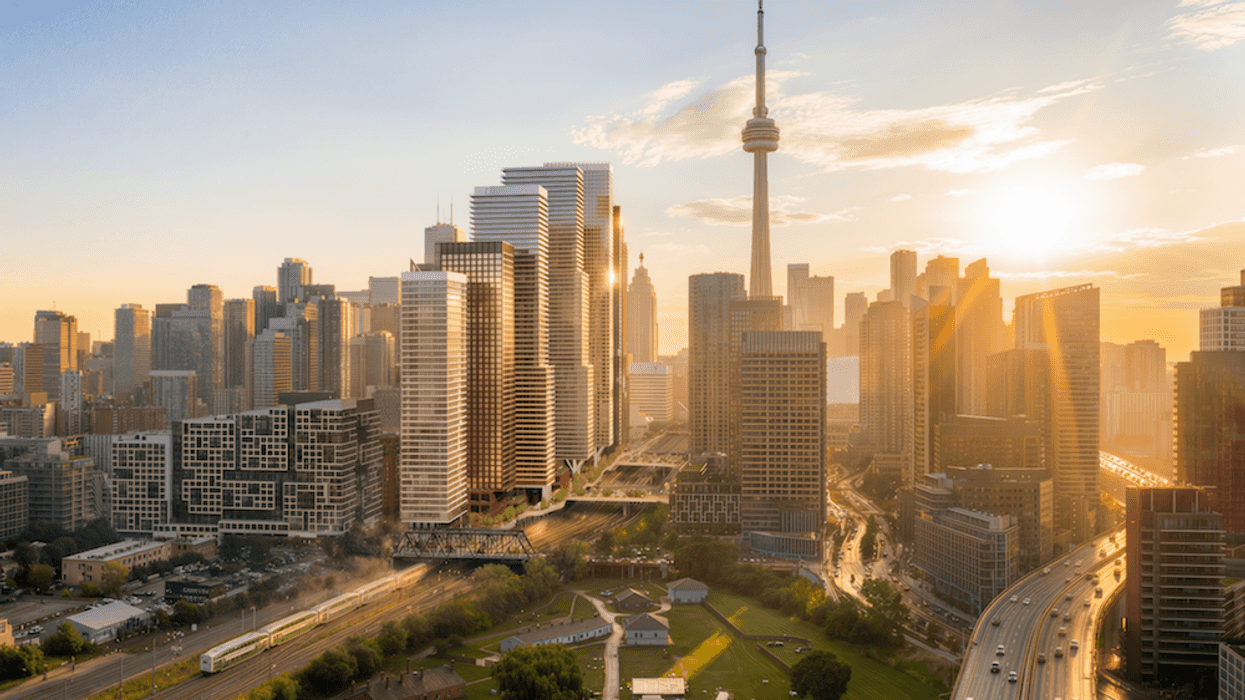
Toronto is set to develop a new mixed-use community called Toronto Rail Yards, transforming airspace above the Union Station rail corridor into a vibrant neighborhood with homes, offices, and public spaces.
New York City’s Hudson Yards, Chicago’s Millennium Park, and Paris’s Rive Gauche share a remarkable similarity: they are all constructed directly over active railway lines. Now, Toronto is poised to follow suit with a fresh initiative that aims to create a comprehensive mixed-use community rather than just a park. The airspace above the Union Station rail corridor has been a topic of discussion for several years. In 2016, former Toronto mayor John Tory proposed Rail Deck Park, envisioning a 21-acre green area with an estimated cost of $1.7 billion. After years of planning and consolidating ownership, the LiUNA Pension Fund of Central and Eastern Canada, in collaboration with master developer Fengate Asset Management, has unveiled its revised vision for the Toronto Rail Yards. This ambitious project will span 14 acres above the north side of the rail corridor situated between Bathurst Street and Spadina Avenue, featuring 4,000 homes, office spaces, 50,000 square feet of retail, two childcare centers, and an expansive public green area.At the core of this community will be a two-acre public realm that emphasizes greenery, public art, play structures, seating areas, cycling routes, and spaces for community gatherings, accommodating everything from farmers markets to performances. The total development will encompass approximately seven million square feet across eight towers—one dedicated office tower and seven residential buildings. This community is designed to function as a complete neighborhood rather than a standalone development, a significant shift from previous concepts.
“This is a truly transformational project in the heart of downtown Toronto,” stated Jordana Ross, Vice President of Development at Fengate. “We aim to convert unused air rights over the rail corridor into a vibrant, genuinely mixed-use community.” The Toronto Rail Yards will prioritize walkability, eliminating parking spaces and promoting a transit-oriented lifestyle. It will connect directly to the future Spadina-Front GO station located below, which is just one stop from Union Station and within walking distance of key areas such as the Financial District, Entertainment District, CityPlace, and The Well.
The proposed housing will feature a variety of unit sizes to cater to diverse demographics and lifestyles. Approximately 27% of the planned units are intended as two- and three-bedroom homes, aimed at families, although the final mix of units will evolve throughout the planning and development phases. A significant emphasis of the proposal is on enhancing the public realm, with landscaped pathways linking Front Street to the elevated deck above. Ross highlighted the potential for substantial improvements to Front Street, which currently lacks even a sidewalk, stating, “At the moment, it’s essentially a chain-link fence and an embankment down to the rail corridor. We are eager to enhance that situation.”
While comparisons to New York's Hudson Yards are likely, Fengate insists that the project is tailored to Toronto's specific context. “We take pride in this being a Toronto-born project,” Ross remarked, pointing out the complexities involved in coordinating with Metrolinx and integrating the anticipated GO expansion plans. The current vision is more focused than earlier iterations, as certain areas above the active rail lines are intentionally left undeveloped to accommodate future infrastructure needs related to the GO expansion and to provide flexibility as planning for the Spadina-Front GO station progresses. The outcome is a six-acre development platform situated north of the active tracks, still delivering approximately seven million square feet of mixed-use density.
Constructing an entire community above an active rail corridor presents significant engineering challenges. Site preparation is not slated to commence until 2028, with the deck construction expected to take three and a half years. If realized as proposed, the Toronto Rail Yards will generate considerable economic activity, with an estimated 4,600 construction jobs and around $1.5 billion in labor income throughout the development process. “This is a bold and ambitious move for city-building,” Ross concluded. “There are few sites of this magnitude left in downtown Toronto.”
🏷️
housing
rail corridor
Infrastructure
mixed-use development
LiUNA Pension Fund
transit-oriented development
Toronto
Fengate Asset Management
Urban planning
public space
← Previous Post
Broccolini Moves Forward with The Riv: A New Mixed-Use Residential Development in Toronto4 months ago