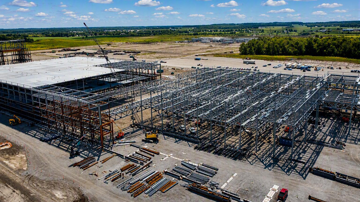
Canadian Construction Industry Faces Significant Challenges in 2026, Yet Some Markets Show Growth Potential
📅 4 months ago

While the Canadian construction industry experiences a significant downturn in early 2026, specific markets such as Alberta, British Columbia, and smaller provinces like Saskatchewan and Manitoba are projected to see growth, highlighting opportunities amidst broader economic challenges.
The Canadian construction industry is navigating through considerable challenges as 2026 unfolds. By the end of April, total construction starts have plummeted nearly 40 percent compared to the same timeframe last year, primarily due to sluggish activity in the nonresidential and civil sectors. The outlook for the remainder of the year does not indicate much relief, with total starts anticipated to decline by 16.3 percent from the previous year, 2025. This downturn is indicative of a broader softening in the macroeconomic environment, influenced by factors such as U.S. tariffs, ongoing trade uncertainties, a diminishing population, and the global energy crisis, all of which have diminished both current and future economic momentum. However, it is important to note that not all markets are experiencing the same downturn. Certain segments are projected to expand even in the face of this broader decline, creating targeted opportunities for firms that are strategically positioned to pursue high-growth markets. While the national statistics reflect a troubling trend, there are pockets of strength within the overall landscape. Ontario, which represented over 40 percent of Canada’s total construction market in 2025, significantly impacts the national outlook as it faces a pullback. Nevertheless, excluding Ontario from the equation reveals a different story, as construction is set to grow in other regions in 2026, despite the overall smaller dollar value compared to Ontario. Alberta and British Columbia are at the forefront, with construction starts expected to rise by 7.1 percent and 12.2 percent, respectively. This positive trend is largely bolstered by strong forecasts in civil projects, as government initiatives to develop roads, power infrastructure, and other heavy engineering projects gain momentum. Meanwhile, Quebec is also on track for growth, albeit at a more modest rate of 6.9 percent, driven by anticipated increases in medical, commercial, and industrial construction sectors that keep the province in positive territory. Additionally, two smaller provinces are projected to show even more dramatic increases, with Saskatchewan and Manitoba expected to grow by 130.7 percent and 22.2 percent, respectively. These figures, while impressive, should be contextualized, as spending patterns in smaller markets can often be more volatile and subject to larger swings. The overarching narrative of declining construction starts in Canada obscures a more complex reality. Ontario, being the largest province in terms of both population and construction expenditure, is responsible for a significant portion of the expected decline. However, by looking beyond Ontario, several regions reveal potential for meaningful growth. For construction firms, the key to navigating this challenging landscape lies in identifying and targeting these high-growth markets, where opportunities still exist despite a general softening of the national construction picture. Devin Bell serves as an associate economist at ConstructConnect.
🏷️
Canadian construction
Ontario
Manitoba
construction starts
Saskatchewan
Alberta
nonresidential construction
Quebec
civil engineering
British Columbia
← Previous Post
Innovative Reuse of Concrete Components Gaining Momentum in Construction4 months ago
Next Article →
Toronto Secures $1.5 Billion in Funding to Reduce Development Charges and Boost Housing4 months ago