The Evolution of Concrete Monitoring: From K-Type Thermocouples to SmartRock Technology
📅 4 months ago
🏷️ Giatec Scientific Inc.
Exploring the advancements in concrete monitoring technology, this article discusses the limitations of K-type thermocouples and the benefits of wireless sensors like SmartRock and SmartRock Pro.
In the realm of concrete monitoring, the traditional K-type thermocouple has been a staple for measuring temperature during pours. However, those who have experienced the frustration of losing a temperature reading due to damaged wires understand that the challenges associated with thermocouples extend beyond mere accuracy. As construction projects evolve, the demand for reliable, continuous, and accessible data has become paramount, outpacing the capabilities of wired sensors and data loggers. This article delves into the functionality of K-type thermocouples, their limitations, and how innovative wireless concrete sensors have emerged as superior alternatives for monitoring applications.K-type thermocouples operate on the Seebeck effect, generating a small voltage from two dissimilar metals—chromel and alumel—joined at one end and subjected to a temperature gradient. According to standards set by NIST and IEC 60584, their voltage-temperature relationship is well-defined, and they are capable of measuring temperatures ranging from -328°F (-200°C) to +2300°F (+1260°C). While these specifications suggest that K-type thermocouples perform adequately for concrete monitoring, especially within the temperature range pertinent to ACI 301 and ACI 207.2R compliance, their operational shortcomings are evident in practical applications.
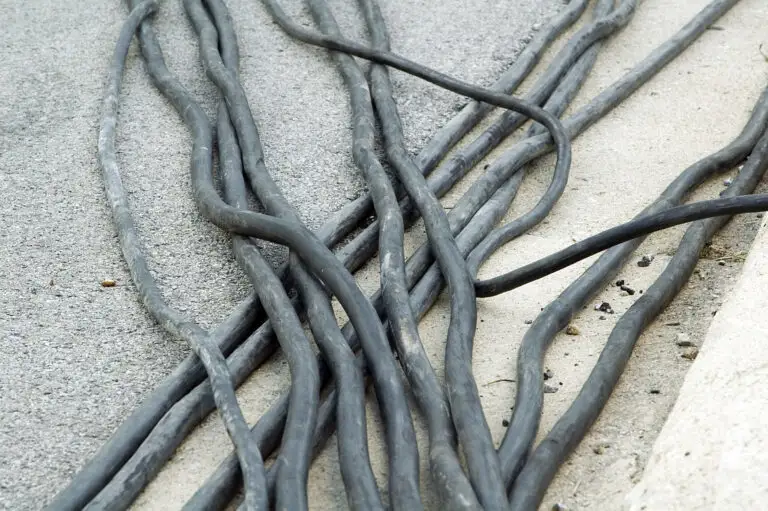
The installation and management of K-type thermocouples involve embedding the probes at specified depths within the concrete pour and connecting them to data acquisition units or handheld readouts. This process requires meticulous wire management to prevent damage during construction, a challenge that is compounded on busy job sites. Extension leads can easily be cut or crushed, leading to erroneous or absent readings, and cold junction compensation errors can accumulate, resulting in skewed data. Additionally, the necessity for matched extension leads to avoid introducing measurement errors further complicates the setup.
The maturity method, standardized in ASTM C1074, underlines the importance of temperature data in estimating concrete strength. However, the reliance on K-type thermocouples for this data creates vulnerabilities, as any failure in the wire connections or cold junction compensation can directly impact strength estimates. This reliance on physical infrastructure means that data retrieval requires personnel to be present on-site, which is not always feasible for remote teams.
In contrast, Giatec Scientific's SmartRock and SmartRock Pro sensors have been developed to address these operational limitations. SmartRock is recognized as the leading wireless maturity sensor, employing the ASTM C1074 method to continuously measure temperature and calculate in-place concrete strength without the need for wires or data loggers. Its installation is straightforward—simply attach the sensor to rebar before the pour, and it begins collecting data in real-time, accessible through a mobile app or cloud dashboard.
SmartRock Pro takes this innovation a step further by being the first fully self-calibrating concrete strength monitoring sensor. Utilizing patent-pending Concrete Electro-Mechanical Microstructural Analysis (CEMMA) technology, it measures concrete strength directly, eliminating the need for pre-pour calibration curves tied to specific mix designs. This capability is particularly beneficial in projects where mix variability poses a risk, as it provides real-time insights into the concrete's microstructure development without the complications associated with traditional methods.
Both SmartRock and SmartRock Pro centralize data collection across multiple sensors into a single platform, streamlining the monitoring process. This integration facilitates compliance documentation, as the systems automatically generate audit-ready reports, eliminating the manual data compilation often required with K-type thermocouples. Furthermore, these wireless solutions significantly reduce the risks associated with cold-weather performance, as they do not rely on external reference points that could drift due to environmental conditions.
While K-type thermocouples remain relevant in specific scenarios—such as high-temperature industrial applications or legacy systems requiring continuity—most structural concrete projects are now better served by wireless monitoring solutions. The operational advantages of SmartRock technology, including ease of installation, real-time data access, and self-calibration, underscore the industry's shift towards more efficient and effective methods of concrete monitoring. As construction practices advance, the question is no longer whether to transition to wireless solutions, but rather which wireless tool best suits the project's specific needs.
🏷️
SmartRock Pro
concrete monitoring
maturity method
construction technology
real-time data
ASTM C1074
K-type thermocouples
SmartRock
wireless sensors
temperature monitoring
← Previous Post
Ontario Government Invests Additional $7.8 Million to Address Inactive Oil and Gas Wells4 months ago
Next Article →
Ontario Government Invests $8 Million in Critical Minerals Innovation Fund Projects4 months ago