Federal Regulators Accelerate Power Connections for AI Data Centers Amid Rising Demand
📅 4 months ago
Federal regulators have approved measures to expedite connections for large energy users, particularly AI data centers, to the U.S. power grid, addressing concerns over rising energy demands and local community impacts.
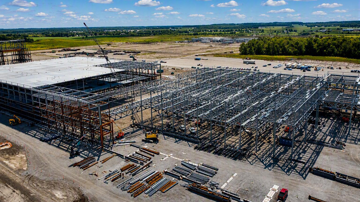
In a significant move to address the increasing energy demands from artificial intelligence data centers, federal regulators have granted permission for large energy consumers to connect more rapidly to the United States' aging electric transmission system. This decision, which comes at a time when competition with China in the burgeoning AI sector is intensifying, was advocated by Energy Secretary Chris Wright. The Federal Energy Regulatory Commission (FERC) unanimously voted to facilitate timely and orderly connections for AI data centers and other substantial power users, a step welcomed by tech companies and data center developers. However, this rapid connection process has raised concerns among utilities, states, and regional grid operators, who fear that the Republican administration's initiative might undermine their authority in managing the interconnection process. Clean energy advocates are particularly anxious about the potential regression of state-level efforts aimed at promoting renewable energy sources. FERC's decision reflects a growing backlash against data centers, driven by apprehensions over escalating electricity prices and the vast amounts of energy and water these facilities consume, which in turn raises serious environmental and resource management issues across the country. During the vote, Laura Swett, the chair of FERC and a Trump appointee, termed the action as historic, emphasizing the necessity to modernize the electricity market while ensuring that consumers do not bear the financial burden of connecting large power users to the grid. "I know that Americans across the country are concerned about affordability, and so are we," Swett remarked, underscoring the commission's commitment to maintaining reasonable rates for electricity. Under the new directive, data centers will be responsible for covering the full costs of any grid upgrades required for their connections. However, this order fails to alleviate the pressing energy supply constraints that have led to rising electricity bills in certain regions and prompted warnings of potential blackouts due to the rapid construction of data centers outpacing the establishment of new power plants. This regulatory vote follows an appeal made by Wright eight months prior, urging the independent agency to take more decisive action in connecting the extensive network of data centers necessary to support AI technologies to high-voltage transmission lines. As tech giants scramble to secure sufficient power for their operations, many are facing significant delays in connecting to the electric grid, with reports indicating that in some areas, the wait could extend for years. Additionally, these companies are encountering widespread opposition from local communities, who express concerns about living near data centers due to fears of increased electricity costs, pollution, and excessive water usage. Protests have emerged over the potential loss of open spaces, farmland, and the rural character of regions where these facilities are proposed. Currently, over 4,000 data centers are operational in the U.S., with another 3,000 in various stages of planning or construction, many of which consume energy levels comparable to that of small cities. The size of these facilities has surged to meet the demands of AI technology. Amid this backdrop, former President Trump has sought to mitigate public worries regarding AI, branding the rapidly advancing technology as essential for attracting foreign investment and preserving the U.S.'s economic and military strength. Recently, he signed an executive order establishing a framework for the federal government to assess potential national security risks associated with advanced AI systems before their release to the public. In a prior move in December, FERC took steps to expedite electricity access for data center operators, allowing tech companies to connect directly to power plants. Major companies, including xAI, Google, Microsoft, Meta, Oracle, OpenAI, and Amazon, have pledged their commitment to the Ratepayer Protection Pledge initiated by Trump, agreeing to develop or acquire new power generation sources for their data centers and finance necessary infrastructure upgrades. They have also promised to provide backup generation to prevent blackouts during emergencies and to hire locally for data center construction projects. According to the Electric Power Research Institute, data centers currently account for approximately 5% of the total electricity demand in the U.S., with projections indicating that this figure could triple by 2035. In Virginia, data centers already represent over 25% of overall electricity demand, a figure anticipated to rise to more than 40% by 2030. Despite the increasing investment in data centers by tech companies, evidence suggests that construction is lagging behind demand. A recent report by J.P. Morgan highlighted that over 60% of the data center capacity slated for completion by 2027 has not yet commenced construction, with an additional 7% facing delays, primarily due to permitting issues and challenges in acquiring gas turbines, transformers, and skilled labor.
🏷️
data center construction
AI data centers
FERC
renewable energy
Infrastructure
energy affordability
electricity grid
energy demand
power supply
electric transmission system
← Previous Post
Ground Honored for Future Ontario Mine Rescue Training Academy in Sudbury4 months ago